
Ancient Indian Sages Had Highly Advanced Scientific Knowledge Thousands Of Years Ago
Ellen Lloyd - AncientPages.com - Is it possible that some of the world's greatest scientific achievements originate from India? Could it be that many of our modern inventions are not so 'modern' at all?
Can ancient Hindu texts offer evidence that ancient Indian scientists were familiar with today's technology thousands of years ago?
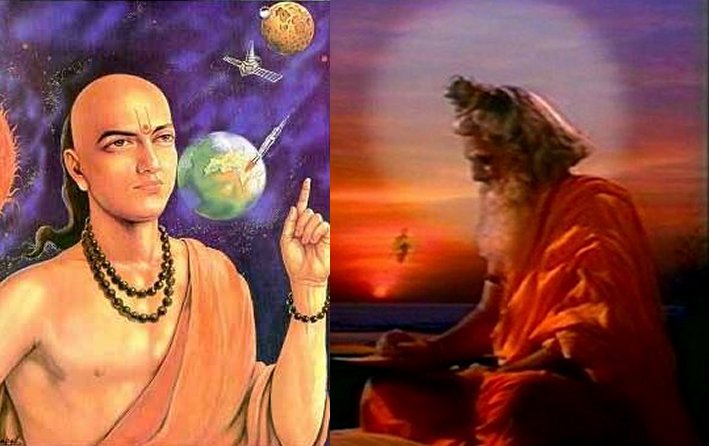
Were ancient Indian scientists familiar with high-tech long before other civilizations gained the same knowledge? Credit: Public Domain
To suggest that India possessed superior scientific knowledge long before the rest of the world may seem like a very controversial statement, but if we take a look at ancient texts, myths, and legends, this claim does not seem far-fetched at all. Ancient India was adept at genetics and plastic surgery, and it is believed that the miraculous birth of the warrior king Karna in the Mahabharata, the Hindu epic, outside his mother's womb offers evidence that "genetic science was present at that time".
This subject was discussed in our article dealing with the suggestion that evidence of plastic surgery and genetic science has been found in ancient Vedas.
Is it possible that skilled doctors conducted complicated surgeries like fractures, cesareans, removing of urinary stones, cataract surgery, artificial limbs, brain surgery, and even plastic surgery thousands of years ago in India?
Evidence Of Ancient High-Tech In Vedic Scriptures
By studying the ancient Sanskrit texts with great attention to detail, we can rediscover prehistoric aviation activities of the Indian gods.
Indian legends refer to horseless chariots and to airplane-like vehicles. India was the land of flying machines, known as Vimanas described in many ancient texts like Yajurveda, Mahabharata, Samarangana Sutradhara, Rigveda, Ramayana, and even older ones.
In the Mahabharata, the hero Arjuna, for example, sees "an incredible ship of the sky" which lands softly on the ground. "Wonderful lights flashed on the Vimana's smooth body.
Arjuna rose and approached the craft, a door opened at its side and a flight of steps flowed out from it."

Rishi Vyas, a sage who classified the Vedas and is also generally considered the author of the Mahabharata. Image credit. srimadbhagavatam.org
These machines existed thousands of years ago in ancient India. We also know from Vedic scripts that the gods' weapon arsenal included nuclear, biological, chemical, and meteorological weapons. In ancient texts, it is mentioned how ancient Indian gods were in possession of a weapon called the "Pasupata". It was forbidden to launch it against humans and planet Earth.
The weapon remains a big mystery. The only thing we know is that it was used only once when Arjuna wanted to demonstrate the weapon's potential to his brother. After launching the Pasupata, the whole Earth began trembling, the mountains were divided, and an extremely strong wind began to blow, followed by a great fire and the darkened sun. The other gods then yelled: "Arjuna, Arjuna does not use this weapon." Another weapon that was forbidden to use on the Earth was a special arrow called the "Pradyumna", which if launched had similar destructive effects on the planet.
The Legend Of Kauravas is a very curious story that raises many thought-provoking questions. The story described in Mahabharata tells about Kauravas who were 100 sons of the King of Hastinapur Dhritarashtra, and his wife Gandhari. How could Gandairi give birth to 100 children on the same day? Why were all 100 babies taken out of their jars all at once? Were people in ancient India familiar with cloning and test-tube babies? It certainly does sound remarkable, but if true, it wouldn't be the first time we encounter ancient sophisticated knowledge in India that has somehow been “neglected” by modern science.
According to Vedic literature, the mysterious Rishis lived thousands of years ago, before the dawn of historical times, in a remote region of the Himalayas. The Rishis were extraordinary in many ways. They were spiritual scientists who possessed divine knowledge and mastered astronomy, technology, medicine, and many other scientific fields.
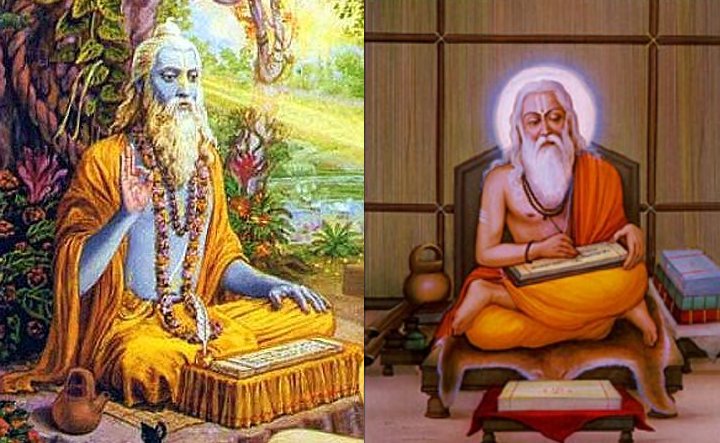
The Rishis were extraordinary scientists. Credit: Pinterest/image complied by Ancient Pages
The four Rishis Agni, Vayu, Aditya, and Angiras were later replaced with another group of Rishis, who were seers, with an amazing memory, and they passed on this knowledge to successive generations. In India, these great beings seem to have taken birth again and again in every age to keep up the Sanatana Dharma, which they cognized at the beginning of the world!
Giving mythological lessons to defense scientists, India’s defense minister Manohar Parrikar said the ancient sages of the country were “probably great scientists”.
Parrikar also said that the "vajra", a mythical indestructible weapon was most likely superior technology used by a highly advanced ancient civilization in India.

Vajra is a Sanskrit word that defies translation because of its numerous meanings, but essentially vajra is an indestructible substance, usually represented by a diamond. Read more
What was most unusual about the Rishis was their ability to combine spirituality with science. The Rishis had control over ego and anger. They were very educated and yet they remained humble.
If you are curious about ancient Indian scientists, you can read here about ten remarkable ancient Indian sages who knew were familiar with gravity, airplanes, missiles, atomic theory, medicine, astronomy, cosmology, and long before the modern era.
Written by Ellen Lloyd – AncientPages.com
Copyright © AncientPages.com All rights reserved. This material may not be published, broadcast, rewritten or redistributed in whole or part without the express written permission of AncientPages.com
More From Ancient Pages
-
 11th-Century Pratihara-Era Temple Accidentally Found By A Farmer In Uttar Pradesh, India
-
 Evidence Supporting Drumelzier Legend And Merlin’s Death In Scotland Uncovered By Archaeologists
-
 Beautiful Ancient Irish Legend Of The Blessing Of The Bees – Ancient Tradition Revived In Ireland Again
-
 Pre-Inca Temple With Colored Paintings And Carved Sculptures Discovered At The Los Paredones Archaeological Complex, Peru
-
 More Than 10,000 Artifacts Unearthed At The Birthplace Of Texas
-
 Bones Of Giants Unearthed In Ancient Cave
-
 Why Was The Dmanisis Gora Fortress Community So Resilient In The Transition From The Bronze To Iron Age
-
 Milk Enabled Massive Steppe Migration
-
 Ancient DNA Reveals Bronze Age Women Altered Genetic Landscape Of Orkney
-
 Magnetic Compass Was Invented In Ancient China
-
 Roman Sexuality Was Far More Complex Than Simply Gay Or Straight – Pompeii’s House Of The Vettii Reveals Why
-
 Huge Defensive Wall Excavated At Tel Erani, Israel Is More Than 5,300 Years Old
-
 Riddle Of The Two Calicuts And How We Got History Wrong
-
 Aristotelian Thought Is Being Revived In Lyceum – Ancient School Founded By The Greek Philosopher
-
 Florida’s Ancient Calusa Kingdom Developed Sophisticatedly Engineered ‘Watercourts’
-
 Ancient Papyrus Of Merer Reveals How The Great Pyramid Of Giza Was Built
-
 Illapa: Powerful Master Of Clouds, Rain And Hail – Worshipped By Inca People
-
 Louvre Museum’s Entire Collection Is Now Available Online To Anyone
-
 Early Expansion Of Homo sapiens: Underwater Caves Give New Clues About Sicily’s First Residents
-
 Archaeologists Begin Excavations Of A Sunken Zhiyuan Warship That Sank In 1894

