
Did Our Ancestors Know About Artificial Intelligence?
A. Sutherland - AncientPages.com - Is it possible that many of our "modern" inventions are in fact only prehistoric discoveries and ideas, which belong to ancient scientists?
The monk Gerbert d'Aurillac (920-1003 AD), Professor of the University of Rheims who later became the somewhat controversial Pope Sylvester II, was reported to have possessed a bronze automaton which answered questions.
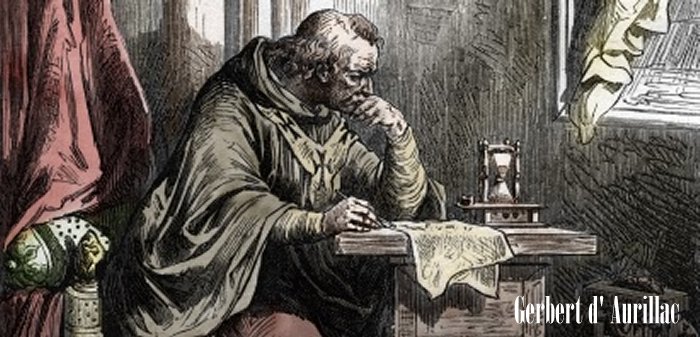
This "robotic head" was constructed by the Pope "under certain stellar and planetary aspects."
The "robotic head" was disposed of after the Pope's death, but records of its early programming and processing may still exist in the Vatican library that is full of secrets and collections that might shock the world.
This early computer would answer questions with "yes" or "no" when a person asked something important concerning politics or religion.

Albertus Magnus (1206 - 1280 AD), the Bishop of Regensburg also known as Saint Albert the Great was one of the most universal thinkers to appear during the Middle Ages, even more so than his most famous student, St. Thomas of Aquinas (1225 - 1274 AD).
He was a learned man who was interested in various scientific endeavors that ranged from natural science all the way to theology.
It is said it took him over twenty years to construct his famous automaton called 'Androides'. In his biography, Albertus Magnus revealed that the android was composed of "metals and unknown substances chosen according to the stars." This mechanical man was able to walk, speak and performed household tasks.
The robot lived together with Albertus and his most famous student, St. Thomas of Aquinas. Unfortunately, one day when Thomas Aquinas became tired of the robot, talking all the time, and smashed the machine with hammer.
Written by – A. Sutherland AncientPages.com Staff Writer
Copyright © AncientPages.com All rights reserved. This material may not be published, broadcast, rewritten or redistributed in whole or part without the express written permission of AncientPages.com
More From Ancient Pages
-
 On This Day In History: ‘Edict Of Nantes’ About Freedom Of Religion Issued By Henry IV – On Apr 13, 1598
-
 Stone Age Statues Were Taken To Britain For Restoration In 1990 – Never Returned Home To Jordan
-
 Unexpected Discovery Of Rare Ancient Roman Carved Wooden Figure In Buckinghamshire
-
 Cartography Shows That The Isthmus Of Tehuantepec Was Used As An Inter-Oceanic Passage In The 16th Century
-
 5 Lessons From Ancient Civilizations For Keeping Homes Cool In Hot, Dry Climates
-
 New Insight Into Genetic History And Social Structures In Neolithic And Bronze Age Croatia
-
 The Golden Apple Myth And Norse Goddess Idun
-
 Nakanishi Ruins: One Of Japan’s Largest Ruins Discovered In Nara
-
 Samurai – Powerful Skilled Warriors Who Loved Music, Art And Poetry
-
 Exploring Ancient Secrets Of An Ancestral Maya Neighborhood And Some Puzzling Buildings
-
 Earliest Evidence Of A 260-Day Maya Calendar Found Inside Guatemalan Pyramid
-
 The Chinese Nostradamus And His Striking Predictions
-
 Oldest Human Remains From Puerto Rico Reveal A Complex Cultural Landscape Since 1800 BC
-
 Unusual Ancient Skull Found In Chan Hol Underwater Cave Reveals Early American Settlers Were Morphologically Different
-
 Fossils In The ‘Cradle Of Humankind’ May Be More Than A Million Years Older Than Previously Thought
-
 Earliest Modern Human Fossil Outside Africa Unearthed At Misliya Cave, Israel
-
 Archaeologists unearthed artifacts in a 3,700 year-old mine factory
-
 Ground-Breaking Discovery: A 3,300-Year-Old Deep-Sea Canaanite Shipwreck Found
-
 First Human Culture Lasted 20,000 Years Longer Than Thought – New Study
-
 Dracula: Cruel, Ruthless And Bloodthirsty Ruler But Not A Vampire

