
How Did Native American Indian Chiefs Get Their Names?
AncientPages.com - Great Native American Chiefs had unusual names, but how exactly did they get their names?
To become an Indian chief, you had to prove that you were strong, brave, and a great leader.
A name was by no means final. Indians often changed names when they became adults. Certain changes in a one’s life also led to a new name. For example, a great achievement, or special event, gave the Indian a new status within the tribe.
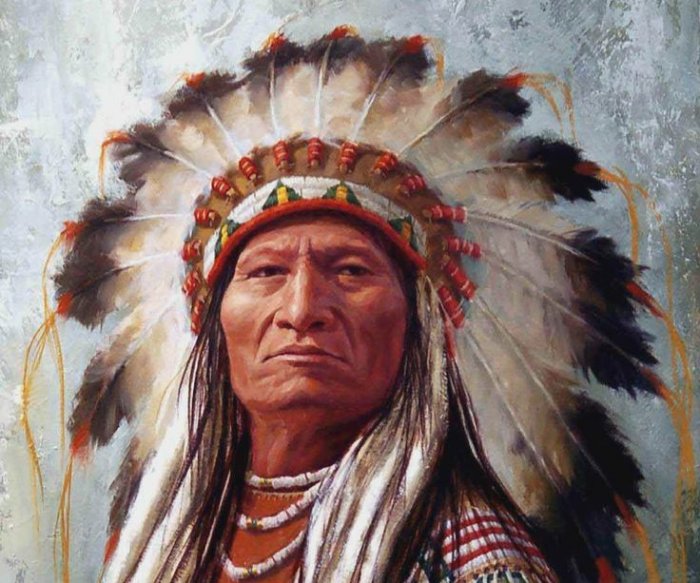
Sitting Bull
Sitting Bull who was a Teton Dakota Indian chief under whom the Sioux tribes united in their struggle for survival on the North American Great Plains was named Jumping Badger at birth.
When Jumping Badger was fourteen years old he accompanied a group of Lakota warriors in a raiding party to take horses from a camp of Crow warriors. Jumping Badger displayed bravery by riding forward and counting coup on one of the surprised Crow, which was witnessed by the other mounted Lakota. Upon returning to camp his father gave a celebratory feast at which he conferred his own name upon his son. The boy’s new name "Buffalo Bull Sits Down", and it would later be abbreviated to "Sitting Bull".
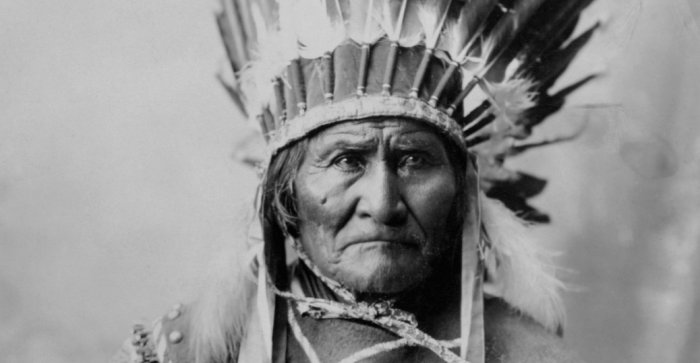
Apache chief Geronimo.
Apache chief Geronimo (1829-1909) was called “One Who Yawns” by his parents. Why the Mexicans called Apache chief Geronimo (Spanish for Jerome) is not certain. Some believe it was a Spanish attempt to pronounce the name Gokhlayeh. Others maintain that his enemies prayed aloud to Saint Jerome whenever the Apache leader struck.
See also:
Native American Tradition Of A Vision Quest – How To Enter The Spiritual World
Native American Sun Dance: Important Ceremony Of The Plains Indians Of North America
Lacrosse Was Invented By Native American Indians
Skidi Pawnee Indians – One Of The Best Sky Watchers Of Ancient Times And Their Star Chart
Crazy Horse (1842-1877) was a principal war chief of the Lakota Sioux. He took up arms against the United States Federal government to fight against encroachments on the territories and way of life of the Lakota people, including leading a war party to victory at the Battle of the Little Bighorn in June 1876. As a child he was called “Curly”. Crazy Horse was named at birth Cha-O-Ha ("In the Wilderness" or "Among the Trees", meaning he was one with nature.) His mother's nickname for him was "Curly" or "Light Hair" because as his light curly hair resembled that of his mother.Just as Sitting Bull, the Sioux had to prove his courage as a young boy which he did and he became known as Crazy Horse. His father, born in 1810, was also named Crazy Horse.
Other Indian chiefs got their names in similar ways.
Copyright © AncientPages.com All rights reserved. This material may not be published, broadcast, rewritten or redistributed in whole or part without the express written permission of AncientPages.com
More From Ancient Pages
-
 Curtana – Sword Of Mercy Once Belonged To The Anglo-Saxon King Edward The Confessor And Perhaps Even The Arthurian Hero Tristan
-
 Antonine Wall: Impressive Roman Frontier Built By Empire’s Three Legions In Scotland
-
 January 2016: Lost Library Of John Dee Revealed In A Special Exhibition
-
 The Helm Of Awe – Powerful Viking Symbol For Physical, Mental And Spiritual Protection
-
 First Pay Toilets Were Invented In Ancient Rome In 74 A.D.
-
 Fall Of The Ancient Maya Civilization Not Caused By Climate Change And Environmental Degradation – Scientists Say
-
 Shennong – Chinese ‘King Of Medicines’ Who Invented Farming Tools And Herbs For Treating People’s Diseases
-
 How Early Farmers In Scandinavia Overcame Climate Change
-
 A Seal Impression Dated To Persian Period Discovered In The City Of David
-
 Drinking Milk Increased Ancient Human Body Size – New Study
-
 Unusual Ancient Skull Found In Chan Hol Underwater Cave Reveals Early American Settlers Were Morphologically Different
-
 On This Day In History: Gerardus Mercator Famous Mapmaker Of All Time Died – On Dec 2, 1594
-
 On This Day In History: 150 Highly-Trained Swiss Guards Entered Vatican For The First Time – On Jan 22, 1506
-
 Climate Change Likely Drove Early Human Species To Extinction – Scientists Say
-
 Mysterious Giant Rock Face Discovered On B.C’s Central Coast – Natural Or Man-Made Structure?
-
 Reliefs And Engravings Of Celestial Bodies And A Zodiac On Walls And Ceilings Of Luxor’s Esna Temple
-
 More Than 1,000 Prehistoric Burial Mounds Discovered In The Netherlands
-
 America’s Native Population Arises From A Single Wave Of Asian Migration – Dental Anthropologists Say
-
 1,500-Year-Old Fingerprints Will Say Much About Potters And Communities That Once Lived In Motza
-
 On This Day In History: Naval Battle Of Porto Bello Begins – On Nov 20, 1739

