
Rise Of League Of Mayapán And The Last Great Maya Capital
A. Sutherland - AncientPages.com - According to the Book of Chilam Balam of Chumayel, Hunac Ceel, ruler of Mayapan, conquered Chichén Itzá in the 13th century. Archaeological data, on the other hand, indicates that Chichén Itzá declined as a regional center by 1250, before the rise of Mayapan.
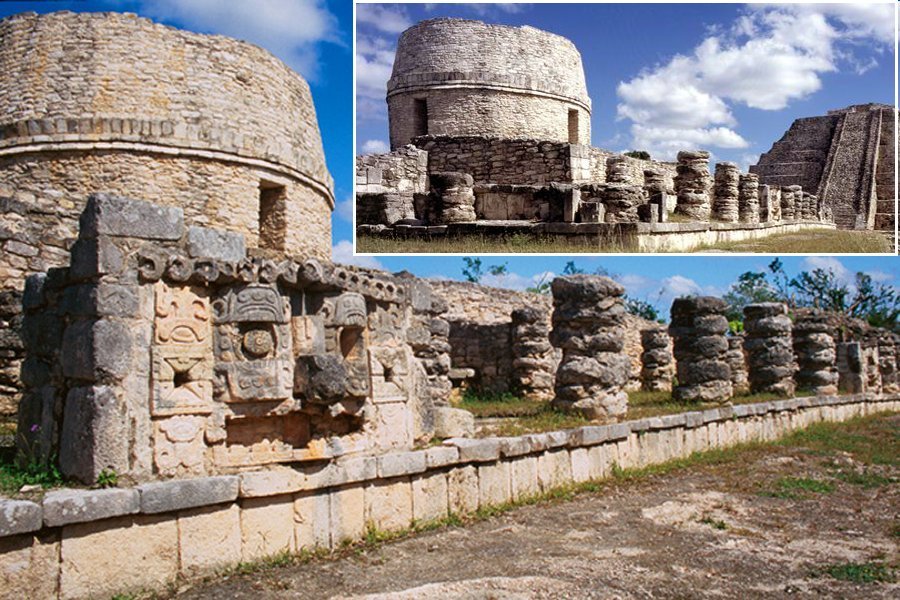
Ruins of the last great city of the Maya – Mayapan. Images credit: Yucatan Gobierno del Estado
Earlier, from the 10th through the 12th century, Chichén Itzá, Uxmal, and Mayapan (means "The Flag or the Banner of the Mayas"), were the three most important and powerful ceremonial centers. Towards the year 1194, the political situation changed and Mayapán took the power from Chichén Itzá and managed to retain it until 1441. The fall of Chichén Itzá initiated two significant events in the history of Yucatán,
- the rise of the city-state of Mayapán, a new capital of the Maya civilization, established c.1263 and 1283 AD and
- the formation of the alliance of Yucatec rulers known as the League of Mayapán.
The League formed by the chieftains of Mayapán, Uxmal, and Chichén Itzá began successfully control the region until 1450 AD. However, not all people were satisfied. The League had many opponents among the inhabitants of the other Mayan kingdoms of the Peninsula.
Nobles were forced to live within the defensive walls of the city so their kingdoms had no choice but to stay loyal to the League.
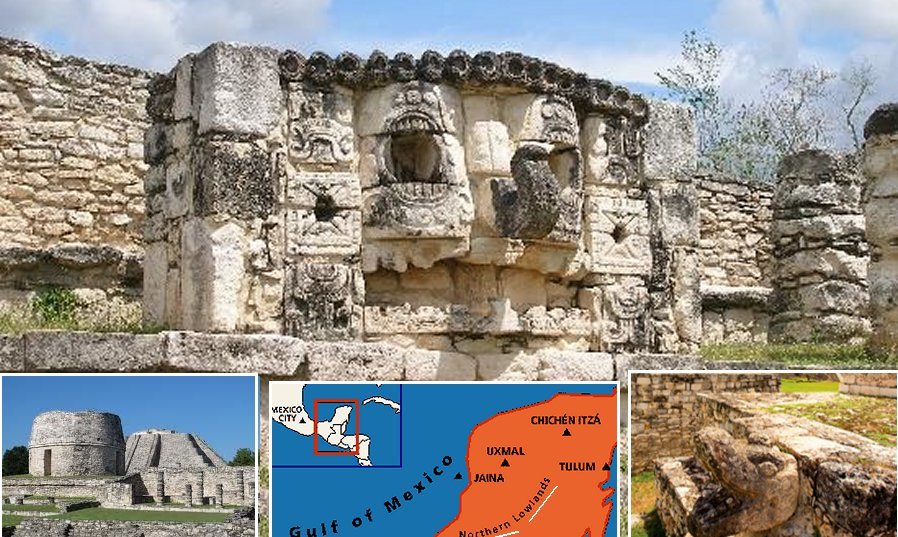
“Mayapán ruled over a large territory in Yucatan. This realm was divided into provinces that were administered as a confederacy under Mayapán’s control. Each province (kuchcabal) was ruled from a prominent town…. They built houses for the lords only, dividing all the land among them, giving towns to each other…. The leaders of these subordinate towns lived in Mayapán, supported by their subjects, “where each lord could keep servants…” according to Bishop Landa’s 16th-century description.
By residing in the capital, these subordinate lords could be closely monitored by Mayapan’s rulers and it was life in captivity.
Around 1440 – 1450 AD, the people who lived in captivity started rebelling against the rule of Mayapán. The League began to decline and by 1461 it was completely disintegrated. The city of Mayapan was burned and abandoned.
City Of Mayapán Resembled Chichén Itzá
Today, the walled city of Mayapán, (known as "Flag of the Mayas"), is considered the last great Mayan capital. It was built in the likeness of Chichén Itzá. At its peak, Mayapán was the most important city but its population was only 15,000 and it covered an area of only 4.2 square kilometers (1.6 miles).
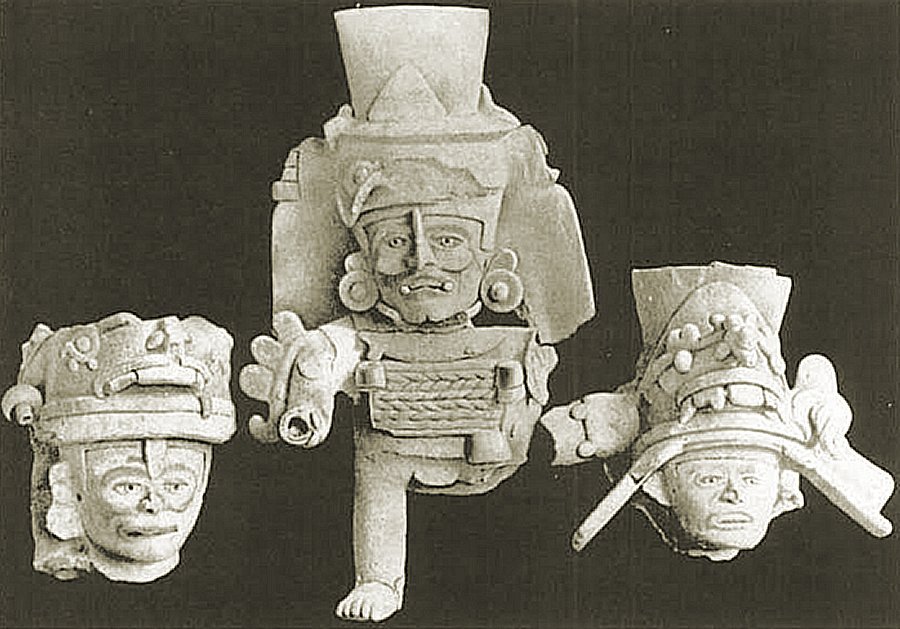
Mayapán-style ceramic idols represent images of gods and were used by the Maya for burning incense. Image credit: Thomas Gann, 1900
About 10-12,000 people lived within the walled city of Mayapán, surrounded by a 9.1 km long and roughly ovate wall.
Archaeological excavations revealed the city’s ceremonial center (constructed in the style of that in Chichén Itzá), tightly packed with about 4,000 functioning structures displaying architecture similar to that of Chichén Itzá.
Among the ruins of Mayapán are temples, shrines, altars, platforms, sanctuaries, colonnaded halls, oratories, and feathered serpent columns.
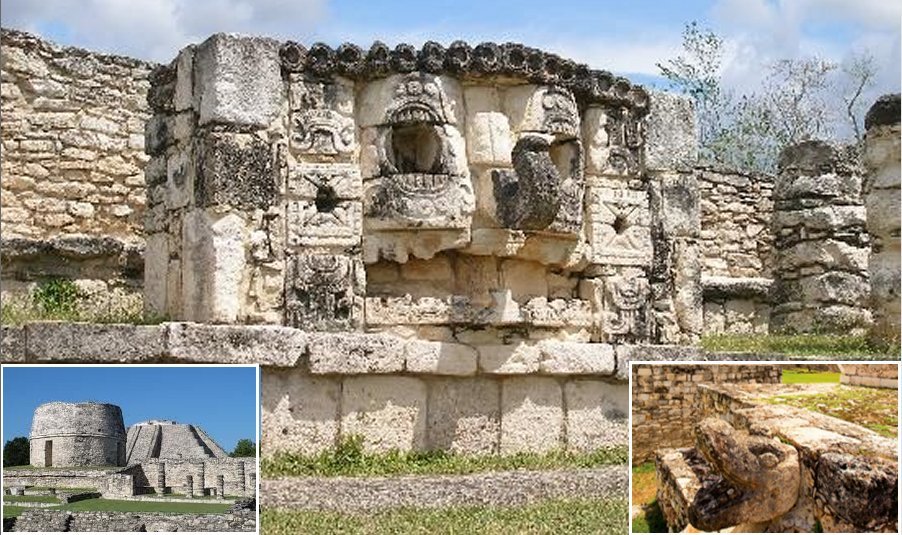
Sculptures, depicting human portraits, feline figures, turtles, serpents, diving figures, and various stelae richly decorate Mayapán’s ceremonial buildings. Archaeological diggings revealed evidence for captive sacrifice at Mayapán, where altars - similar to those used at Chichen Itza – were used for heart excision. Other evidence shows the bones of human sacrifices including some that had been decapitated.

The city’s main temple is the Temple of Kukulkan, a large four-sided and 15 meter-high pyramid known as the Castillo. It is very similar and yet inferior to that of Chichen Itza.
However, an interesting spectacular phenomenon of light and shadow during the winter solstice (December 21) is identical to that experienced at Chichen Itza.
Written by – A. Sutherland AncientPages.com Staff Writer
Copyright © AncientPages.com All rights reserved. This material may not be published, broadcast, rewritten or redistributed in whole or part without the express written permission of AncientPages.com
Expand for referencesReferences:
Foster L V. Handbook to Life in the Ancient Maya World
Sharer R. J. Traxler L.P. The Ancient Maya
More From Ancient Pages
-
 Cacao Was Cultivated By Cultures Along The Pacific Coast Around 5,000 Years Ago – New Study
-
 Perplexing Accounts Of Ancient People Who Demonstrated Incredible Powers Of The Human Mind
-
 Dinosaurs Were On The Up Before Asteroid Downfall – Study Finds
-
 The Word Salary Has Roots In Ancient Rome And History Of Salt
-
 Hedeby: Prestigious Trading Center And One Of The Largest Baltic Sea Ports In Viking Age
-
 Undeciphered Ancient Symbols On Boulders In Pennsylvania And New England Could Be An Ancient Diary Of Forgotten Civilizations And Events
-
 Oral Stories Of Australia’s First Nations Might Be 10,000 Years Old – Evidence Found
-
 6,000-Year-Old Vast Settlement With Tools And Granite Structures Unearthed In Sotta, Corsica In France
-
 The Nunnehi – Immortal Spirit People And Mysterious Protectors Of The Cherokee Nation
-
 Dingoes Given ‘Almost-Human’ Status In Pre-Colonial Australia – Archaeological Study Finds
-
 Yet Another Beautiful Roman Mosaic In Hatay, Turkey
-
 Humanity’s Earliest Recorded Kiss Occurred In Mesopotamia 4,500 Years Ago – New Study
-
 SPQR Was A Symbol Of The Roman Republic
-
 Unearthed Ancient Egyptian Tombs At Tel El-Deir Will Rewrite The History Of Damietta – Archaeologists Say
-
 Unusual 4,000-Year-Old Site And Other Curiosities Discovered In Overstone, Northamptonshire, UK
-
 ‘Vandal’ Of Norwegian Viking Graves Identified But Charges Have Been Dropped!
-
 ‘Bad King John’ Of England: His Lost Treasures Have Never Been Found
-
 Ancient Maya Nose Ornament Made Of Human Bone Discovered In Palenque
-
 Mysterious Lost Tartessian Civilization And Its Ancient Tablet With Paleo-Hispanic Alphabet
-
 Zep Tepi – When Gods Established Their Kingdom On Earth In Egypt

