
Acta Diurna: World’s First Newspaper Appeared In 131 B.C
Conny Waters - AncientPages.com - The history of newspapers goes far back in time. The first proto-newspaper appeared as early as 131 B.C. It was an ancient Roman daily gazette called Acta Diurna (Daily Acts sometimes translated as Daily Public Records). Acta Diurna informed citizens of political and social happenings in ancient Rome.
News of events such as military victories, gladiatorial bouts and other games, births and deaths and even human-interest stories were inscribed on metal or stone and posted in areas with heavy foot traffic, such as the Roman Forum where free citizens met to discuss ideas, philosophy and politics.
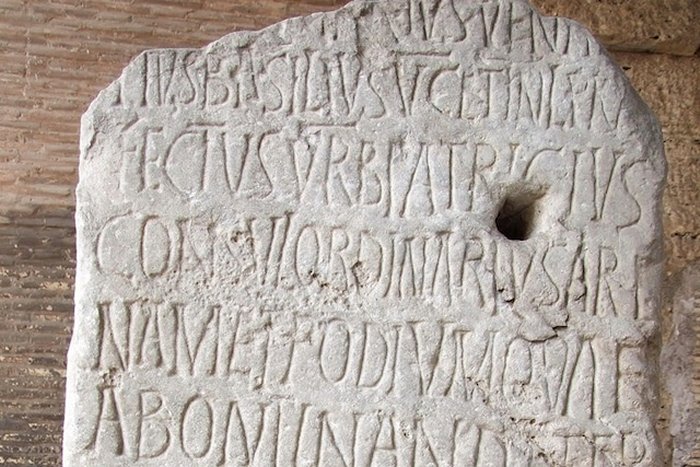
Acta Diurna was the first "newspaper".
After a couple of days the notes were taken down and archived. Unfortunately, no intact copy of the Acta Diurna has survived to the present day.
See also:
Palermo Stone: Oldest History Book Of Ancient Egypt
Codes Of Ur Nammu: World’s Oldest Known Law Code
World’s Oldest Dictionaries Are 4,500-Year-Old Cuneiform Tablets Discovered In Ebla
More Fascinating Ancient History Facts
Sometimes scribes made copies of the Acta and sent them to provincial governors for information. Later emperors used them to announce royal or senatorial decrees and events of the court.

Caesar in the Senate. Credit: Pillole di storia
Tacitus, a senator and a historian of the Roman Empire and Suetonius, Roman historian of the Equestrian Order used these Acta as sources of information about the empire’s early emperors in their histories of Rome.
For many Romans the innovation of the year 59 B.C. must have been a blessing. In that year Caesar was consul, and devoted himself to the task of weakening the Senate. One of the privileges of that body had been a meeting in executive session. Only so much of their deliberations was made public as suited the senators. Caesar, however, arranged that reports of their proceedings should be made public. These reports were called the acta diurna, and constitute the original newspaper.
As Evan T. Sage explains in Advertising among the Romans, "at first they must have included only brief summaries of the meetings. Later, some changes occurred. There seems to have been something resembling the congressional leave to print. At any rate, sometimes speeches were transcribed, with even the interruptions noted.
The most famous example is the speech of the Emperor Claudius on admitting Gauls to the Senate, of which we have another version in Tacitus. With the fall of the Republic the sessions ceased to have so much importance, and the act took on more of the look of the society and local columns of our papers.
Thus we find recorded in the acta the visit to the Emperor of a certain C. Crispinius Hilarus with sixty-one descendants in the direct line; imperial decrees; the story of a faithful dog; various prodigies; divorces; benefactions; suicides; acclamations; construction of public buildings, etc. Doubtless, there might be included announcements of games, readings of poets, etc., and this would correspond to the intrusion of similar matter into the news columns of modern papers.
Written by Conny Waters – AncientPages.com Staff Writer
Copyright © AncientPages.com All rights reserved. This material may not be published, broadcast, rewritten or redistributed in whole or part without the express written permission of AncientPages.com
Expand for referencesSage, Evan T. "Advertising among the Romans." The Classical Weekly 9, no. 26 (1916): 202-08. doi:10.2307/4387300.
More From Ancient Pages
-
 Ancient “Mona Lisa Mosaic Of Kadirli” – Discovered
-
 Monumental Grave Of Ancient Greek Poet Aratus Located In Mersin- But It Cannot Be Opened
-
 On This Day In History: Great Fire Of London Ends – On Sep 5/6, 1666
-
 King Menelaus Of Sparta: Husband Of Helen Of Troy And Key Figure In The Trojan War
-
 Gryla: Cannibalistic, Evil Troll And Her Sons ‘Yule Lads’ – In Icelandic Folklore
-
 Kahina – The Prophetic Berber Queen Who Resisted The Muslim Invasions Of The Numidia Kingdom
-
 500-Year-Old Vaishnava Saint Sculptures Discovered
-
 Native Americans’ Visions Of Distant Explorers May Unravel Some Ancient Mysteries Of North America – Archaeological Evidence – Part 2
-
 12,000-Year-Old Burial Of Female Shaman Unearthed In Turkey
-
 Hadrian’s Wall: North-West Frontier Of The Roman Empire For Nearly 300 Years
-
 Ground-Breaking Discovery: A 3,300-Year-Old Deep-Sea Canaanite Shipwreck Found
-
 First Book Of Breathing: Egyptian Papyrus Sheds Light On Funerary Text Helping The Deceased In Afterlife
-
 Mysterious Ancient Red Princess Of The Silk Road With Cinnabar Dyed Teeth
-
 Our New Relative: ‘Homo Luzonensis’ – New Species Of Early Human Found
-
 In The Neanderthal Site Of Combe-Grenal, France: Hunting Strategies Were Unaffected By Changing Climate
-
 Lamanai, Belize: One Of The Largest And Oldest Maya Cities Dated To 1500 BC
-
 Ancient Petroglyphs Of Cholpon-Ata And Mysterious Balbals Figures That Guard Grave Sites, Kyrgyzstan
-
 Few Witches Were Executed In Wales In The Middle Ages – Why?
-
 Chumash Indians Used Shell Beads As Money 2,000 Years Ago – New Study
-
 New Genes May Explain Why Humans Got Such Big Brains

