AncientPages.com - We often hear that Aboriginal peoples have been in Australia for 65,000 years, "the oldest living cultures in the world." But what does this mean, given all living peoples on Earth have an ancestry that goes back into the mists of time?
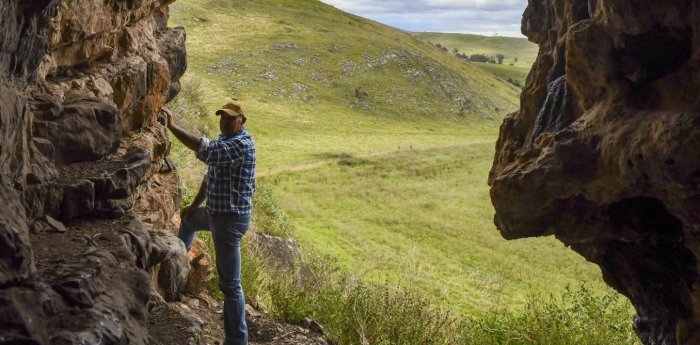
GunaiKurnai Elder Uncle Russell Mullett at entrance to Cloggs Cave, East Gippsland. Credit: Jess Shapiro, courtesy GunaiKurnai Land and Waters Aboriginal Corporation
Our new discoveries, published July 1 in the scientific journal Nature Human Behaviour, shed new light on this question.
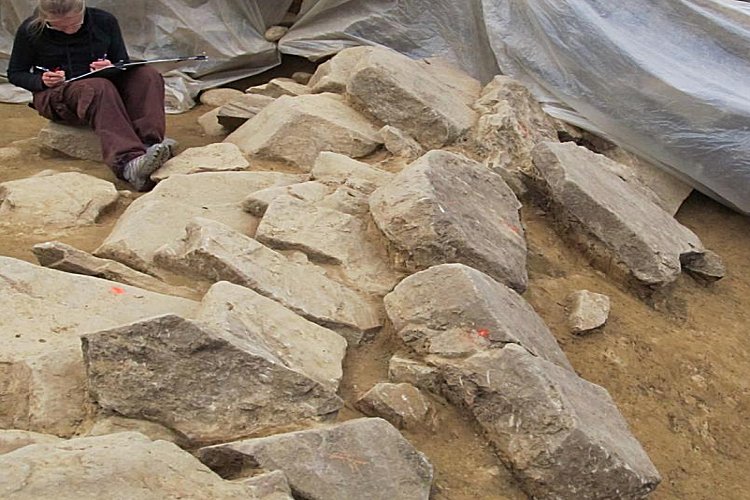
Under the guidance of GunaiKurnai Elders, archaeologists from the GunaiKurnai Land and Waters Aboriginal Corporation and Monash University excavated at Cloggs Cave near Buchan, in the foothills of the high country near the Snowy River in East Gippsland, Victoria.
What we found was extraordinary. Under the low, subdued light in the depth of the cave, buried under layers of ash and silt, two unusual fireplaces were revealed by the tip of the trowel. They each contained a single trimmed stick associated with a tiny patch of ash.
A sequence of 69 radiocarbon dates, including on wood filaments from the sticks, date one of the fireplaces to 11,000 years ago, and the deeper of the two to 12,000 years ago, at the very end of the last Ice Age.
Matching the observed physical characteristics of the fireplaces with GunaiKurnai ethnographic records from the 19th century shows this type of fireplace has been in continuous use for at least 12,000 years.
Enigmatic sticks smeared with fat
These were no ordinary fireplaces: the upper one was the size of the palm of a human hand.
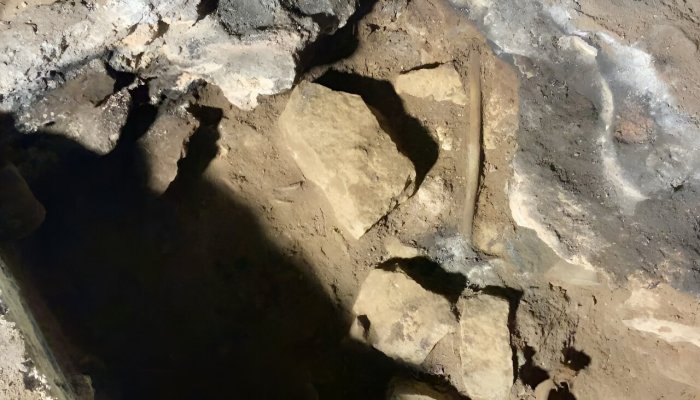
The 11,000 year old ritual fire in Cloggs Cave, East Gippsland. Credit: Bruno David, courtesy GunaiKurnai Land and Waters Aboriginal Corporation
Sticking out from the middle of it was a stick, one slightly burned end still stuck into the middle of the ashes of the fire. The fire had not burned for long, nor did it reach any significant heat. No food remains were associated with the fireplace.
Two small twigs that once grew from the stick had been trimmed off, so the stem was now straight and smooth.
We performed microscopic and biochemical analyses on the stick, showing it had come into contact with animal fat. Parts of the stick were covered with lipids—fatty acids that cannot dissolve in water and can therefore remain on objects for vast lengths of time.
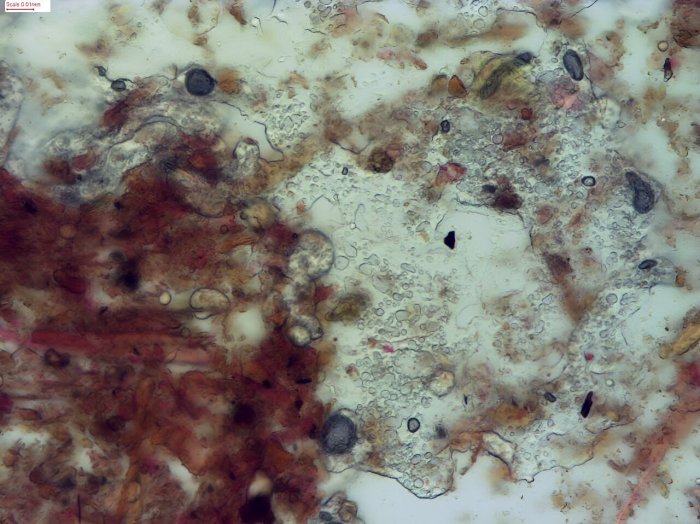
11,000-year-old lipid residues from fat covering parts of the Cloggs Cave ritual stick photographed at 400x magnification. Credit: Birgitta Stephenson, courtesy GunaiKurnai Land and Waters Aboriginal Corporation
The trimmings and layout of the stick, tiny size of the fire, absence of food remains, and presence of smeared fat on the stick suggest the fireplace was used for something other than cooking.
The stick had come from a Casuarina tree, a she-oak. The branch had been broken and cut when green. We know this because of the splayed fibers at the broken end. The stick was never removed from the fire during its use; we found it where it was placed.
A second miniature fireplace slightly deeper down in the excavation also had a single branch emanating from it, this one with an angled-back end like on a throwing stick, and with five small twigs trimmed flush with the stem. It had keratin-like faunal tissue fragments on its surface; it too had come into contact with fat.
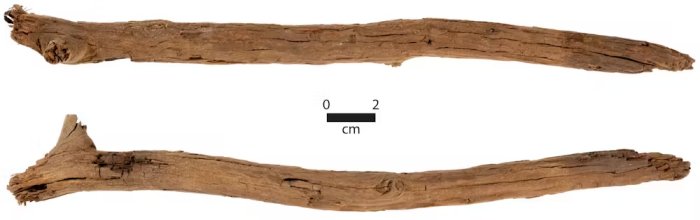
The 12,000 year old trimmed stick with hooked end that mimics a spear-thrower. Photo by Steve Morton, Monash University, courtesy GunaiKurnai Land and Waters Aboriginal Corporation
The role of these fireplaces in ritual
Local 19th-century ethnography has good descriptions of such fireplaces, so we know they were made for ritual practices performed by mulla-mullung, powerful GunaiKurnai medicine men and women.
Alfred Howitt, government geologist and pioneer ethnographer, wrote in 1887:
"The Kurnai practice is to fasten the article [something that belonged to the victim] to the end of a throwing stick, together with some eaglehawk feathers, and some human or kangaroo fat. The throwing stick is then stuck slanting in the ground before a fire, and it is of course placed in such a position that by-and-by it falls down. The wizard has during this time been singing his charm; as it is usually expressed, he "sings the man's name," and when the stick falls the charm is complete. The practice still exists."
Howitt noted that such ritual sticks were made from Casuarina wood. Sometimes the stick mimicked a throwing stick, with a hooked end. No such miniature fireplace with a single trimmed Casuarina stem smeared with fat had ever been found archaeologically before.
500 generations
The miniature fireplaces are the remarkably preserved remains of two ritual events dating back 500 generations.
Nowhere else on Earth have archaeological expressions of a very specific cultural practice known from ethnography, yet traceable so far back, previously been found.
GunaiKurnai ancestors had transmitted on Country a very detailed, very particular cultural knowledge and practice for some 500 generations.
GunaiKurnai Elder Uncle Russell Mullett was on site when the fireplaces were excavated. As the first one was revealed, he was astounded:
"For it to survive is just amazing. It's telling us a story. It's been waiting here all this time for us to learn from it. Reminding us that we are a living culture still connected to our ancient past. It's a unique opportunity to be able to read the memoirs of our Ancestors and share that with our community."
What does it mean to be one of the oldest living cultures in the world? It means despite millennia of cultural innovations, the Old Ancestors also continued to pass down cultural knowledge and know-how, generation after generation, and have done so since the last Ice Age and beyond.
Research Paper:
Bruno David et al, Archaeological evidence of an ethnographically documented Australian Aboriginal ritual dated to the last ice age, Nature Human Behaviour (2024). DOI: 10.1038/s41562-024-01912-w
Provided by The Conversation
This article is republished from The Conversation under a Creative Commons license. Read the original article.