
Pax Romana: 200-Year-Long Period Of Stability Within The Roman Empire
A. Sutherland - AncientPages.com - The Pax Romana (‘Roman Peace’) was a period of relative peace and stability across the Roman Empire which lasted for over 200 years, beginning with the reign of Augustus (27 BC - 14 CE), the first emperor of Rome to the reign of Marcus Aurelius (161 -180 CE).
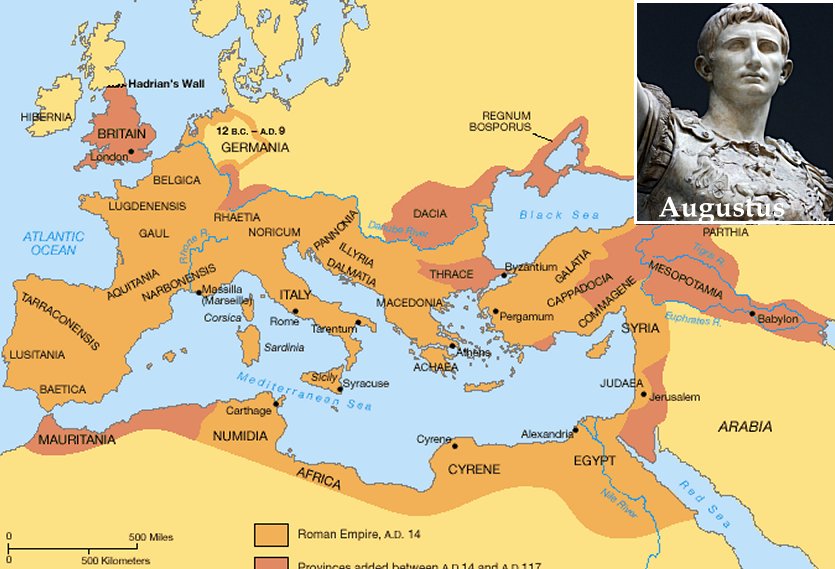
Through the triumphs of Caesar, Augustus, Claudius, and Marcus Aurelius, Rome became one of the largest empires that had ever existed, greater than that of Persia, Assyria, and even challenging that of Alexander the Great.
Augustus, the adopted son of Julius Caesar, laid the foundation for this period of the agreement, which also extended to North Africa and Persia. The main goal of Augustus, who was emperor for 45 years, was to guarantee law, order, and security within the empire.
The empire protected and governed individual provinces, permitting each to make and administer its own laws while accepting Roman taxation and military control.
During the period of Pax Romana, the Roman Republic, and Empire, the borders of Rome continually expanded, so it wasn’t really peace, but the disorder of the previous years was wiped away.
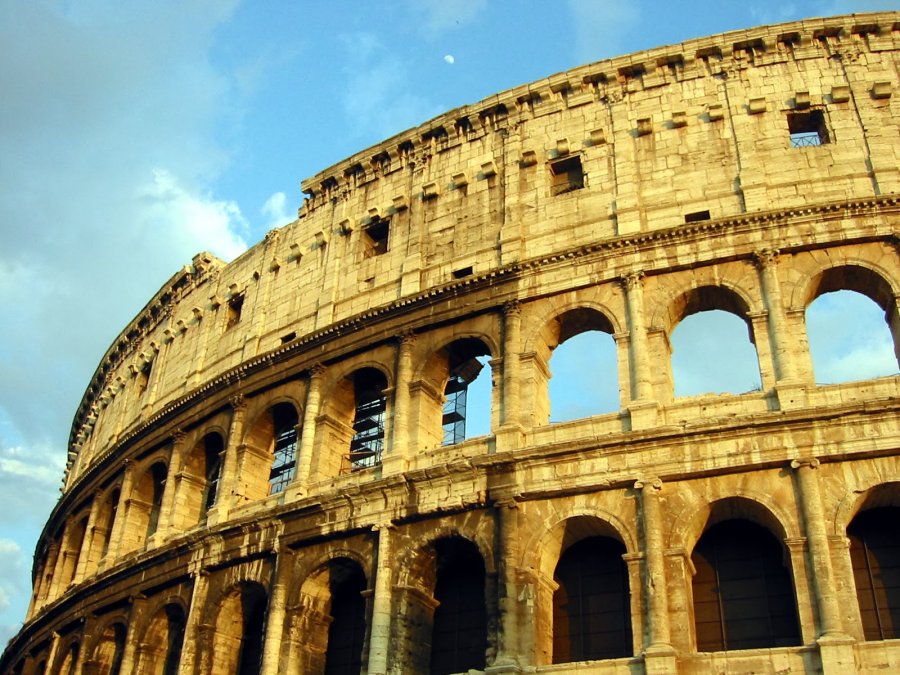
Augustus enacted lay the groundwork for the peace and stability of the Pax Romana.
The Pax Romana was a crucial time for the Roman Empire because the empire itself was stable. The emperors who followed Augustus maintained the Augustan Peace by reducing conflict, expanding the borders, and maintaining harmony at home.
Besides the initial territorial conquests after the Punic Wars, the eternal city added land in the Balkans, Middle East, and North Africa. Later, they would move westward into Gaul, Spain and northward into Germany and Britain. Through the triumphs of Caesar, Augustus, Claudius, and Marcus Aurelius, Rome became one of the largest empires that had ever existed, greater than that of Persia, Assyria, and even challenging that of Alexander the Great.
Many of Rome's most spectacular and huge construction projects were built during this time period, the period we call the Roman Empire. Thousands of miles of roads were built to keep the empire united. Art, literature, and theatre flourished and grew.
Rome was at its height. However, there was a dark and light side of Pax Romana. The era of the Pax Romana did not change conditions for poor people, who lived in poverty, despite all of the wealth of the Roman Empire. There was a huge gap between rich and poor, even if the Romans tried to hide both poverty and unemployment.
Written by – A. Sutherland AncientPages.com Staff Writer
Copyright © AncientPages.com All rights reserved. This material may not be published, broadcast, rewritten or redistributed in whole or part without the express written permission of AncientPages.com
More From Ancient Pages
-
 What Really Happened To Library Of Alexandria Remains A Mystery
-
 British Columbia’s Mysterious Ancient Underground People Who Avoided Daylight And Owned Strange Magical Objects
-
 Mysterious Vanishings Around The Azores And The Riddle Of The ‘Cosmic Brain’ Influence
-
 Priam’s Treasure – Authentic Trove From Homeric Troy Or Deception?
-
 Roman-Era Residence Unearthed In Ancient Capital Of Memphis, Egypt
-
 Chauvet-Pont d’Arc Cave And Surrounding Landscape – What Did The Ancient Artists See?
-
 Tooth Enamel Reveals Life Histories Of Early Humans
-
 On This Day In History: Papal Bull Issued To Arrest All Knights Templar And Seize Their Lands – On 22 Nov, 1307
-
 On This Day In History: Shakespeare’s King Lear Performed Before The Court Of King James I – On Dec 26, 1606
-
 Unique Gold Votive Plaque Found At Fort Apsaros Reveals Evidence Of A Mysterious Roman Sect
-
 Rare Ancient Caribbean Skull Shows Evidence Of Leprosy
-
 1,200-Year-Old Rock-Cut Temple Found On Banks Of Arjuna River,Tamil Nadu, India
-
 Ancient Mediterranean Mystery In The Himalayas Puzzles Archaeologists – Can DNA Or Legends Solve The Riddle?
-
 Why Is The Three Golden Balls Symbol For A Pawn Shop Connected To The Medici Family?
-
 Gefjon: Norse Fertility Goddess Who Knew Humans’ Fates, And Plowed Away Part Of Sweden To Give It To Denmark
-
 8,000-Year-Old Nephrite ‘Frog-Like’ Swastika In Bulgaria’s Neolithic Settlement – Unearthed
-
 Viking Burial With An Unusual Box And Spectacular Grave Goods Found In Aarhus, Denmark
-
 Giant Hrungnir Who Lost The Race And Engaged In A Deadly Duel With Mighty Thor In Norse Mythology
-
 On This Day In History: Gottfried Wilhelm von Leibniz – Famous Philosopher, Scientist And Mathematician Died – On Nov 14, 1716
-
 The Bimaran Casket – Rare Golden Artifact Found In Ancient Stupa

