
Ancient History Of Body Modification In Mesoamerica Practiced By The Aztecs, Maya And Olmecs
A. Sutherland - AncientPages.com - To improve one’s body is something modern people do all the time and it should not come as a surprise that the ancient did the same, only for different reasons and they were often extreme in their practices of changing the natural look of a person’s body.
Body modification was very important to several ancient civilizations. In Mesoamerica the Aztecs, the Maya as well as the Olmecs practiced extensive body modification often for ritual or ceremonial purposes.
Aztecs believed that blood was very important because the spirit essence of man existed in his blood, which also explains all the blood sacrifices they performed. To the Aztecs, body alteration was also considered an important part of movement between major life stages.
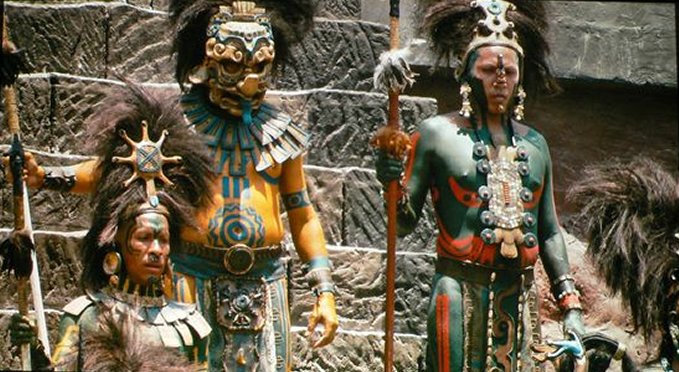
Body modifications Inca style.
Body modification was also a symbol of power among the Aztec rulers. Archaeologists have discovered ancient labrets that the Aztecs pierced through the lower lip. These labrets were in most cases made of gold and in the shape of a serpent.
Ancient Labret Piercing
Gold was considered a sacred and wearing a crafted from this material labret would have underscored the ruler’s divinely sanctioned authority and asserted his position as the individual who could speak for the Aztec Empire. The insertion of a labret was part of a ruler’s accession ceremony and it was worn not only on ritual occasions, but also on the battlefield. Its wearer was seen as a symbol of a serpent ready to strike its prey.

Labret, Serpent with Articulated Tongue (Aztec, 13th-early 16th century), gold, on view at the Metropolitan Museum of Art
Labret piercing was practiced among both men and women in the Aztec society and signified adulthood. Piercing was also done on lips and ears. On religious occasions, all piercing would be worn, and the face would stretch under the weight of such heavy metals.
Ancient Skeletal And Cranial Modifications
Other types of body alternations included skeletal and cranial modifications. Cranial modification was a procedure that took place at an early age, in most cased during infancy because the cranial bones are still soft at this stage and capable of morphing.
Using various methods the goal was to change the growth and shape of the skull. This is why archaeologists today find many skeletons with elongated and deformed skulls.

Ancient elongated Inca skull.
Ancient people of Mesoamerica also modified their teeth. Precious stones such as jadeite, pyrite, or turquoise were often placed into bored holes in the teeth.

Angel Ruíz Novelo, Portrait Head of the ruler K'inich Janaab Pakal II, based on the stucco portrait of the king found beneath his sarcophagus at Palenque, Chiapas
Some Aztec hieroglyphs depict gods with T-shaped teeth, but it is unclear whether this unusual practice was for religious or fashionable reasons. The Vikings for example also filed their teeth for unknown reasons.
Ancient Tattoos
Ancient tattoos were also popular.

These are examples of the tribal language of the Aztecs. These symbols are sometimes used in tattoos because of what each symbol represents, such as the power of the eagle or jaguar.
The most popular Aztec tattoos feature animals such as eagles, jaguars, frogs and monkeys. These are totem animals, also known as spiritual guides. When a person chooses an animal totem, it is because they feel a particular affinity for that animal and are inspired by the creature’s way of life.
The fearsome Aztec Eagle Warriors and Jaguar Warriors of Mesoamerica often had tattoos.
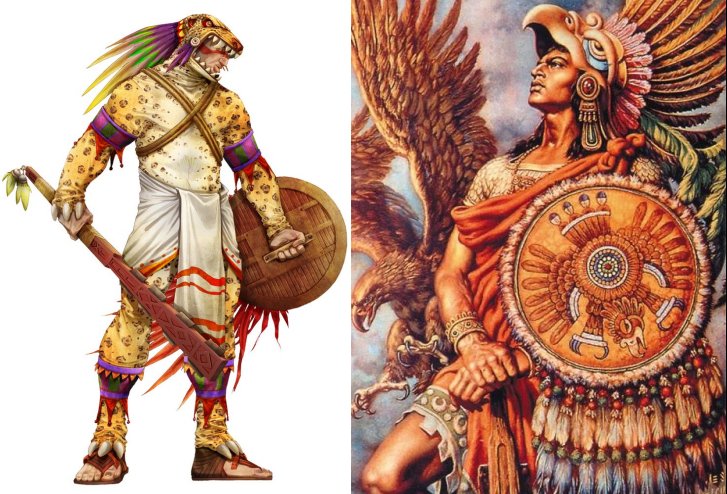
Aztec Jaguar and Eagle Warrior
Skeletons with ancient tattoos are less commonly found than skeletal modifications because of the lessened likelihood of preservation.
The Aztecs also scarification practiced, the permanent and intentional marking of the skin causing scars, but this kind of body modification was relatively limited to the priestly caste in Aztec society.
Archaeologists often discover ancient remains with ear piercings, tattoos, stretched limbs, and other alterations which might look horrible to our modern society, but to the ancient people of Mesoamerica and other parts of the world, these were natural and necessary procedures.
Boyd modification was practiced worldwide.
Written by – A. Sutherland AncientPages.com Staff Writer
Copyright © AncientPages.com All rights reserved. This material may not be published, broadcast, rewritten or redistributed in whole or part without the express written permission of AncientPages.com
More From Ancient Pages
-
 Facial Reconstruction Of 3.8-Million-Year-Old Skull Shows What Our Ancestors Really Looked Like
-
 Large 4,000-Year-Old Sumerian Port Discovered In The Desert In Iraq
-
 Secret Hidden Freemasonic Messages Concealed In Ancient Egyptian Artifacts And Roman Works – A Misunderstood Object? – Part 1
-
 Mesopotamian City Jemdet Nasr Dated To 3100–2900 BC: Sophisticated Irrigation Techniques And Earliest Cylinder Seals
-
 America’s Mysterious Pedro Mountain Mummy And The Hidden Race Of Little People
-
 Londinium: Ancient Roman Outpost That Became Powerful City Of London
-
 Homo Erectus Was Too Lazy And Went Extinct
-
 Massive Menhir Champ Dolent Built By Fairies In Ancient Beliefs Of Brittany’s People
-
 Huge Golden Eagle Relief Made By The Aztecs Discovered At Tenochtitlan
-
 Abundantia: Roman Goddess Who Was Shaking Her Gifts From Cornucopia – ‘Horn Of Plenty’
-
 More Than 1000 Bones Of Extinct Predators From 240 Million Years Ago – Found In Upper Silesia, Poland
-
 Rose Cross – Powerful Symbol That Existed Long Before Christianity
-
 Deliberately Broken Vessel Depicting Warriors In Combat Discovered At the Chankillo Solar Observatory In Casma Valley, Peru
-
 Medieval Manuscript Reveals Surprising Discovery Of Star Wars Master Yoda & Shocking Monsters
-
 The Great Stupa At Sanchi – Oldest Stone Structure In India
-
 Pharaoh Apries – Was The Betrayed Egyptian King Murdered By His Own People?
-
 Unique 17th Century Sunken Swedish ‘Bodekull’ Ship – Identified
-
 Early Humans Risked Life -Threatening Flintknapping Injuries – Long-Lasting Tradition
-
 Mysterious Killke Culture Of Peru: Did They Construct Sacsayhuaman?
-
 Controversial Discovery Of 5,7-Million-Year-Old Footprints On Crete Could Re-Write History Of Human Evolution

