
Master Kong Confucius: Great Philosopher And ‘Teacher Of All Teachers’ Ahead Of His Time
A. Sutherland - AncientPages.com - In China, he is mostly known as Master Kong or Kong Fuzi, we know him as Confucius.
Like the other great teachers of Central Asia, he was a contemporary of Buddha, Mahivira, and Lao Tzu.
He was one of the most influential Chinese thinkers, well known for his work in social relationships.
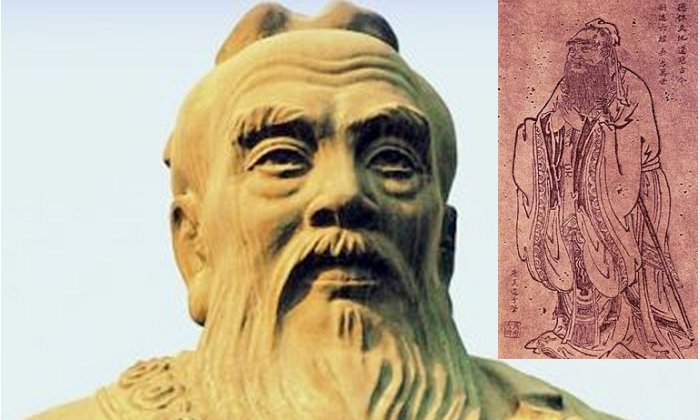 The philosophy of Confucius—Confucianism—emphasized personal and governmental morality, the correctness of social relationships, justice, kindness, and sincerity. Confucianism was part of the Chinese social fabric and way of life; to Confucians, everyday life was the arena of religion.
A system of thinking, Confucianism is named for him, and supports his Five Relationships: father-to-son, brother-to-brother, husband-to-wife, peer-to-peer, and king-to-subject.
Confucius - a fifth-century BC philosopher - believed that they bring peace and prosperity to all people.
He is considered the “teacher of all teachers,” and his teachings known as “Confucianism” were taught in schools and had a great impact on both the past and present Chinese culture. However, among his contemporaries, he was a controversial teacher much ahead of his time.
Confucius did not consider himself a ‘creator’ but rather a ‘transmitter’ of these ancient moral traditions. His school taught writing, rules of behavior, and basic knowledge.
What makes Confucius so special is that he did not claim that his doctrine comes from divine inspiration or another source inaccessible to ordinary people.
Legend has it that when he died, his students mourned him for three years, and the most faithful of them Tzu Kung – a businessman, an accomplished speaker, a good leader, who, probably led his own Confucian school at some point – visited the master’s grave in Qufu for six years saying: “Since the beginning of mankind until now there wasn’t a man equal to Confucius.”
Confucius’ simple, undogmatic maxims are still popular. He argued that the moral sense in man is the equivalent of the cosmic order of nature. He never referred to the supernatural.

Confucianism is not a religion, but rather a system of ethics, learning how to be a good, moderate, socially, and ethically valuable man.
He was born in 551 BC in the State of Lu, (known today as Qufu in Shandong Province) in an impoverished aristocratic family. He was born in uncertain times also characterized as an era of philosophical creativity. The rulers and subjects of the various regions sought both knowledge and power.
His father was a military officer and died when the son was 3 years old. Mother raised him alone. Confucius knew poverty and endured a poverty-stricken and humiliating youth but despite a hard life, he dedicated himself to study at the age of 15.
Confucius – an intellect with a noble morality – pursued truth, propriety, righteousness, wisdom, and trustworthiness, kindness and perfection throughout his life, and his success and failure were largely due to his character.
Some of his famous words are:
“Everything has its beauty but not everyone sees it”
“Our greatest glory is not in never falling, but in getting up every time we do”.
Or: “Forget injuries, never forget kindness”.
Written by – A. Sutherland AncientPages.com Staff Writer
Copyright © AncientPages.com All rights reserved. This material may not be published, broadcast, rewritten or redistributed in whole or part without the express written permission of AncientPages.com
Expand for referencesMore From Ancient Pages
-
 Ancient Enigma Of Mercator’s Amazing Map
-
 Illapa: Powerful Master Of Clouds, Rain And Hail – Worshipped By Inca People
-
 A Head Of A Statue Dated To 700 BC, Animal Figurines And Jordan Valley’s Occupation History
-
 European Mythical Creatures Encountered In The Witcher Series
-
 Yomi – Kingdom Of The Dead In Japan’s Native Shinto Religion
-
 Was Biblical King David Unknowingly Part Of A Secret Master Plan?
-
 John Dee’s Magical Mirror Used To Contact Spirits Can Be Traced To The Aztecs
-
 On This Day In History: Spanish Villasur Expedition Wiped Out By Pawnee And Otoe Warriors – On August 14, 1720
-
 On This Day In History: Ramesses II Became Pharaoh Of Ancient Egypt – On May 31, 1279 BC
-
 Rapa Nui’s Population: Growth And Decline – Lesson For Our Future?
-
 Brian Boru – Famous And Brave Irish Hero Who Dared To Chase Off The Vikings
-
 Thousands Want To Drink Red Liquid From The Granite Sarcophagus In Egypt
-
 Can You Help Identifying This Strange Bamboo Cart Found In A Melted Glacial Path In Switzerland?
-
 Evidence Of The Moon-Eyed People – More Clues – Part 2
-
 Skulls and inscriptions on three rings found by archaeologists in Wales
-
 Tharais: Buried For Centuries And Largely Forgotten Byzantine City Identified In S. Jordan
-
 Did Pharaoh Shishak Plunder King Solomon’s Temple?
-
 Colossus Of Standing Falcon-Headed God Horus Unearthed In Egypt’s Luxor
-
 Vikings: Facts And History About The Tough Norse Seafaring People
-
 On This Day In History: Nevada Became The 36th State In The USA – On Oct 31, 1864

