
Mysterious And Sacred Intihuatana Stone Of The Inca Was More Than Just An Astronomy Calendar
Ellen Lloyd - AncientPages.com - The magnificent Inca Machu Picchu ruins fascinate people of the modern world. Standing on the highest elevation within the Inca citadel is the Intihuatana stone. The four sides of the Intihuatana stone represent the 4 cardinal points.
Most tourists who visit the site, think the remarkable Intihuatana stone is an astronomy calendar or clock, but to the Inca, the stone was much more than just an astronomical tool.
As people of the Sun, the Inca deliberately picked this particular place to erect the sacred Intihuatana stone.

Left: Viracocha, is the creator god in Inca mythology. Right: Intihuatana stone.
Carved from a huge slab of rock, the Intihuatana stone was designed to "hitch" the Sun at the two equinoxes, on March 21st and September 21st. On those days, the Sun stands directly above the Intihuatana, creating no shadow because the rock has an inclination of around 13 degrees. The Intihuatana stone testifies to the Incas’ astronomical skills.
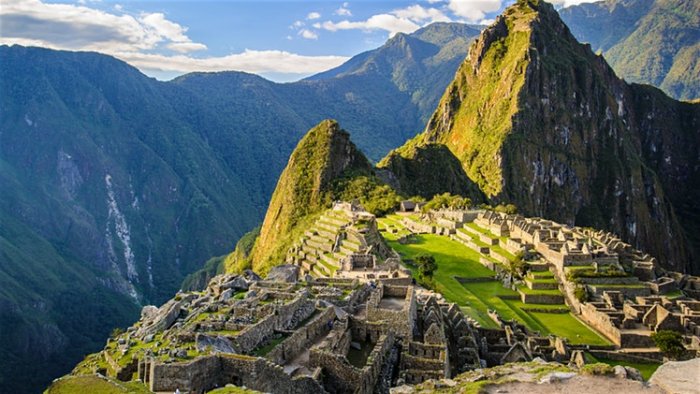
Machu Picchu, Peru
There is no doubt that the Intihuatana stone was an important astronomical device, similar to a sun dial, but it was also a sacred, ritual stone. Its name is derived from the local Quechua language and can be translated as “place to tie up the sun”, with inti being the word for sun, wata being the verb root for “to tie” or “to hitch”, and –na a suffix indicating tools or places. In English, the Inca rock is often referred to as "The Hitching Post of the Sun".
See also:
Puzzling Huge Ancient Sayhuite Monolith In Peru Remains An Unsolved Mystery
Manco Capac: Legendary Founder Of The Inca Dynasty Of Peru
Story Of Atahualpa: The Last Emperor Of The Inca Empire
The Inca believed the Intihuatana stone held the Sun in place. By holding rituals around the sacred stone, they hoped the world would never turn up-side-down. Ceremonies on the two equinoxes’ dates ensured good harvest and prosperity.
It is often said that Intihuatana stone serves as a portal to another world. By touching the sacred stone or placing one's forehand against it, a sensitive person can open a vision to the spiritual world.
Some years ago, the Ministry of Tourism in Peru, roped off the sacred Inca stone and people are no longer allowed to touch it.
The Inca believed that if the Intihuatana stone was damaged or destroyed, their civilization would perish. The sacred Intihuatna stone was damaged on December 8, 2000 when a 1,000-pound crane used to film a beer commercial toppled over and chipped off a piece of the stone’s granite.
The Intihuanta is sometimes referred to as Saywa or Sukhanka stone.

Credit: Peru Explorer
Saywas were astronomic markers, aligned with relevant dates in the Inca calendar. Such ancient astronomical markers could be erected on important mountain tops for the rise and decline of celestial bodies in their ecliptic, but Saywas could also be placed in the middle of the desert, like researchers recently discovered when they identified an Inca calendar in the Atacama Desert.
The Intihuatana stone shouldn’t be associated with the Inti Raymi, Inca’s Sun Festival traditionally celebrated at Cuzco on June 24, which marks the winter solstice, the shortest day of the year - the Inca New Year (in regions south of the equator the Gregorian months, June and July are winter months).
Written by - Ellen Lloyd – AncientPages.com
Copyright © AncientPages.com All rights reserved. This material may not be published, broadcast, rewritten or redistributed in whole or part without the express written permission of AncientPages.com
More From Ancient Pages
-
 Unexplained Mystery Of The Dangerous Invisible Enemy In A French Town
-
 Medieval Warhorses Were Pony-Sized And Much Smaller Than Previously Thought
-
 Home Of The Gods – Ancient Cities, Underground Worlds, Incredible Technology And Date Of Departure – Part 2
-
 Unique Finds Uncovered In The Necropolis Of Harbor City Of Dromolaxia-Vyzakia, Cyprus
-
 Ancient Monuments The World Is Not Allowed To See – Reason For Denial? – Part 1
-
 The Gold Compartment At Habu Temple Looks Magnificent After Restoration
-
 Soyal: Hopi Indians’ Winter Solstice Celebration And Arrival Of Katchinas
-
 How Did The Early Rapa Nui People Put Huge Hats On Giant Statues Of Easter Island?
-
 Rhetorica ad Herennium: Ancient Book That Improves Your Memory Using Method Of Loci – You Can Test It Easily
-
 Katana ‘Soul Of The Samurai’ – Most Famous Japanese Sword With Long Tradition
-
 Unexpected Discovery Of Roman Baths Under Split City Museum In Croatia
-
 Surprising Mask Of A Human Face Found On Cistern Wall In The Ancient City Of Ptolemais
-
 Amazing Ancient Underwater Treasures Recovered From Lake Lednica, Poland – Gifts To The Gods Or Weapons Used In A Battle?
-
 The Lycurgus Cup: Fascinating Artifact That Reveals Prehistoric Knowledge Of Nanotechnology
-
 Tlayococ Cave’s Hidden Chamber Filled With Rare Pre-Hispanic Artifacts Left By The Extinct Tlacotepehua People
-
 Bolivia And The Mystery Of The Twins Of Atlantis
-
 Baffling North American Ancient Skulls Contradict Historical Timelines And Mainstream Theories
-
 Ancient Chaco Canyon Was Much More Than A Ceremonial Site New Study Reveals
-
 Yam: Tyrannical Hydra-Like Sea Monster God Cast Out Of Heaven
-
 Nicholas Owen ‘Little John’ Who Paid Highest Price For His Ingenious, Camouflaged Places To Hide

