
Remarkable Ancient Statues From The Eye Temple – Unique Legacy From Tell Brak, Syria
A. Sutherland - AncientPages.com - These remarkable statues with over-seized eyes raise some very intriguing questions.
Why have no similar eye idols been found in any other region? Who were these strange beings with huge staring eyes?
The eye idols of Tell Brak have no parallels, in either Syria or Mesopotamia and they could help us answer important questions of the history of the region.
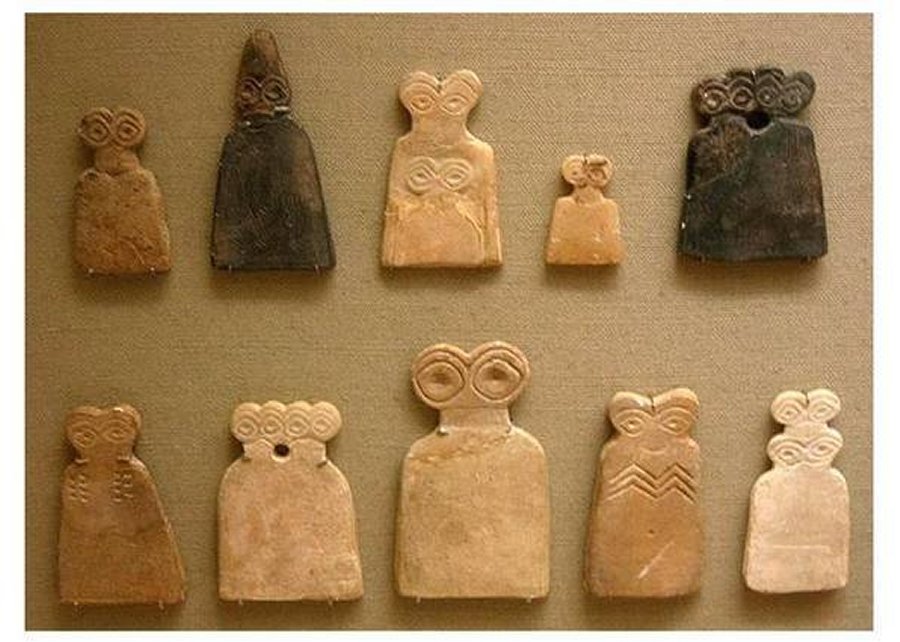
Tell Brak idols. Image credit: collector-antiquities.com
Unfortunately, due to the troubled situation in Syrian, the eye idols are now on the emergency red list of Syrian cultural objects at risk.
Not much is known about the origin and nature of these remarkable eye idols.
The figures made of stone and having incised eyes were excavated at Tell Brak, where hundreds were found in a building now called the Eye Temple.
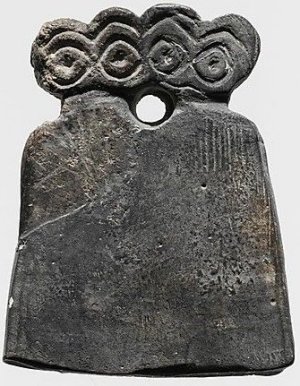
Image credit: metmuseum.org
The idols vary in size from about 3 to 6 cm in height and are made of either white or black alabaster.
Tell Brak, located in the Upper Khabur region of northeast Syria on the fertile plains near the Tigris river, is one of northern Mesopotamia's largest ancient sites and among the world's earliest cities.
It was first photographed from the air by Fr Pierre Poidebard in the 1920s and was first excavated by Sir Max Mallowan in 1937-8.
From 2011, archaeological research at Tell Brak was funded by a British Academy Research Development Award (BARDA).
In ancient times, Tell Brak was considered an international city. It was home to several civilizations over the centuries, including the Sumerians, Babylonians, Akkadians, and the Mittani's. The city was finally abandoned in c.2000 BC.
"Although Tell Brak is in north-eastern Syria, both the decoration and plan of the Eye Temple resemble that of south Mesopotamian temples, such as those in Uruk and Eridu. Eye symbolism was also popular in Mesopotamia around this time, and eye designs have been found on objects from the Royal Cemetery from Ur as well as in temples.
The Eye Idols of Tell Brak, however, are completely unique and have no parallels, in either Syria or Mesopotamia," the Fitz William Museum informs.
The eye idols discovered at the site date to about 3,300 BC. Many of them are incised with multiple sets of eyes, others with jewelry and still others with representations of "children"-smaller eyes and body carved on the body of the larger idol.
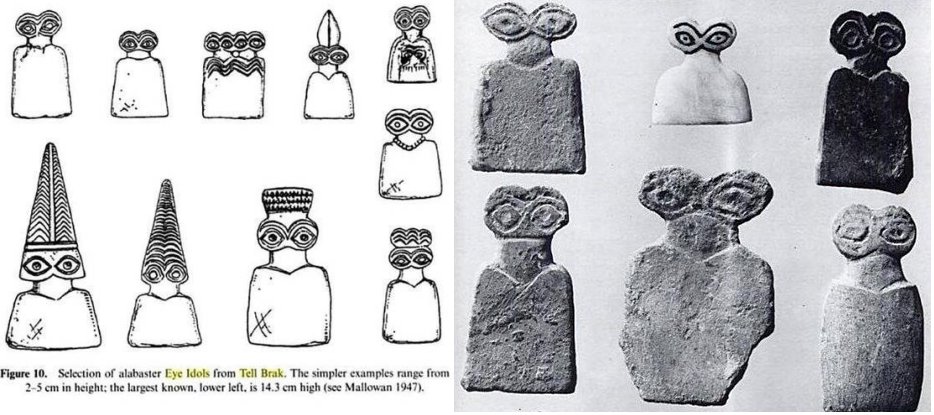
Image credit: collector-antiquities.com
According to historians and archaeologists, the idols are thought to be offerings. It is believed that wide eyes demonstrate attentiveness to the gods in much Mesopotamian art. The reason why so many of these figures were left in the temple, was that they were considered gifts to the gods.
The decoration of the idols varied, and it seems that they may have been personalized. Some of the figures have carved lines and zig-zags on their bodies depicting clothes. There are even examples of group idols representing more than one figure, some of which have a smaller 'child' figure carved onto the front.
The sad part of this story is that the magnificent Tell Brak eye idols are now on the emergency red list of Syrian cultural objects at risk.

The eye idols discovered at the site date to about 3,300 BC. Many of them are incised with multiple sets of eyes, others with jewelry, and still others with representations of "children"-smaller eyes and body carved on the body of the larger idol. Image credit: Museum zu Allerheiligen, Schaffhausen, Switzerland
Several archaeological sites in Syria have been damaged due to bombing and ancient museum's artifacts are looted and burned.
On top of the loss of artifacts, several of Syria's UNESCO World Heritage Sites have reportedly been damaged or destroyed since the conflict began in the spring of 2011!
See also:
Mysterious Sumerian Statues With Big Blue Eyes – A Sign From The Gods
White Temple Of God Anu In Sacred Precinct Of Kullaba At Uruk
Nippur – Holy City Of God Enlil And One Of The Oldest Cities Of Sumer
Sumerian Stele Of The Vultures: Oldest Known Historical Records Carved On Limestone
"Museums, auction houses, art dealers and collectors are encouraged not to acquire such objects without having carefully and thoroughly researched their origin and all the relevant legal documentation. Due to the great diversity of objects, styles and periods, the Emergency Red List of Syrian Cultural Objects at Risk is far from exhaustive. Any cultural good that could have originated from Syria should be subjected to detailed scrutiny and precautionary measures," the world museum community warns.
The destruction of the eye idols of Tell Brak, other artifacts, and archaeological sites is a sad part of human history.
Are we witnessing the end of the Syrian cultural heritage?
Written by – A. Sutherland AncientPages.com Senior Staff Writer
Copyright © AncientPages.com All rights reserved. This material may not be published, broadcast, rewritten or redistributed in whole or part without the express written permission of AncientPages.com
More From Ancient Pages
-
 Ancient Mysteries Of Arizona – Traces Of A Vanished Race And Secrets Of An Underground World
-
 6,500-Year-Old Pottery Belongs To Unknown Ancient Culture That Lived In Ecuador
-
 On This Day In History: First Public And Free School Opened For Poor Children – On Sep 15, 1616
-
 Rare 4,000-Year-Old Sauna Discovered In Scotland
-
 1.3-Million-Year-Old Stone Age Axe Discovered In Morocco Pushes Back The Start Sate Of Acheulian Technology In North Africa
-
 History Of Eyeglasses: One Of The Most Important Inventions Is Lost To History
-
 On This Day In History: Noah Webster, Jr. “Father Of American Scholarship And Education” Was Born – On Oct 16, 1758
-
 Use Of Horses In the Bronze Age – New Facts
-
 DNA Study Shows Pre-Historic Wallacea Was A Melting Pot Of Human Genetic Ancestries
-
 On This Day In History: First European Sights The Ruins Of Ancient Maya City Of Copán – On Mar 8, 1576
-
 Remains Of Tower That Defended Chichester’s Castle Built After The Norman Conquest Of England – Unearthed
-
 Native American Villages Reported By John Smith 400 Years Ago Discovered In Virginia
-
 Ancient Mayans Used Saunas For Healing Purposes
-
 Archaeologists Discover Long-Lost Scottish Monastery Of Deer And Solve An Old Manuscript Mystery
-
 10 Ancient Chinese Musical Instruments You Didn’t Know About
-
 Hoard Of Roman Bronze Coins Turns Out To Be Offering For Safe Crossing
-
 Well Of Urd (Urdarbrunn): Abode Of Fate Goddesses And Powerful Symbol In Norse Beliefs
-
 On This Day In History: Reginald Walter Bonham Was Born – On Jan 31, 1906
-
 Towering Sacred Mt. Fuji: Abode Of The Immortals In Ancient Japanese Beliefs
-
 2000-Year-Old Antikythera Mechanism – Experts Recreate A Mechanical Cosmos For The World’s First Computer

