
What Is The Curse Of The Ninth Symphony?
Conny Waters - AncientPages.com - If you enjoy classical music, you may have heard about the curse of the ninth symphony. It’s an old belief that makes some think a composer will die after completing his ninth symphony. But how and why did this belief spread?
It turns out that the curse of the ninth symphony can be traced to Ludwig van Beethoven, a German composer, and pianist. When Beethoven died in 1827, he had completed nine symphonies. He started working on his tenth musical work but could not finish it because he died.
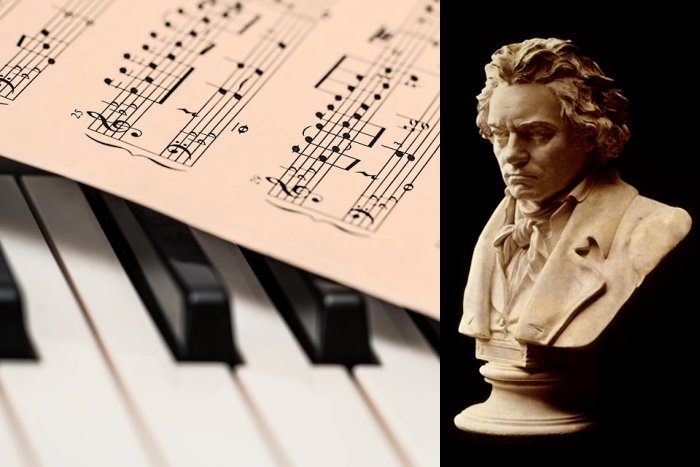
Beethoven was one of many composers who died after finishing their ninth symphony. Image credit: Public Domain
It’s not unusual that an artist or musician dies before he or she can finish their masterpiece, but Beethoven was not the only composer who left this world after completing the ninth symphony.
An Austrian composer, Anton Bruckner (1824 – 1896) died before he finished his ninth symphony.
From the New World, a famous symphony was the ninth and last musical work written by Antonín Dvořák (1841 – 1904), a Czech composer.
Gustav Mahler (1860 1911), a late-Romantic Austrian composer, started to panic when he noticed that so many had died after writing their ninth symphony. He became convinced the ninth symphony must be cursed. Desperately trying to avoid the curse, he cheated. Mahler wrote a musical piece called Das Lied von der Erde, but though it was a symphony, he refused to call it so.
In the book Gustav Mahler: The Symphonies, author Constantin Floros writes that Mahler “did not dare to call it a symphony because he had an outright, superstitious “fear of the idea of the Ninth Symphony.” He firmly held to the superstition “that no great symphonic writer was to live beyond his Ninth.”
Mahler believed that he had fooled the curse and started working on symphony no. 9, though it was his tenth work. However, higher powers had other plans for him. Mahler died while working on his tenth symphony.
Those who believe in the curse of the ninth symphony say that other composers such as Kurt Atterberg, Elie Siegmeister, Alfred Schnittke, Roger Sessions, Egon Wellesz, Ralph Vaughan Williams, Peter Mennin, Malcolm Arnold, and David Maslanka all died before they could begin working on their tenth symphony.
Arnold Schoenberg (1874 -1951), an Austrian-American composer, once expressed his concern by saying that “it seems that the Ninth is a limit. He who wants to go beyond it must pass away. It seems as if something might be imparted to us in the Tenth which we ought not yet to know, for which we are not ready. Those who have written a Ninth stood too close to the hereafter.”

Is the curse of the ninth symphony just a coincidence? Some say yes, and those who are more superstitious think something sinister is at work here. As mentioned earlier on Ancient Pages, many ancient cultures regarded the number 9 (or ‘Nine’) as a symbol of perfection, unity, and freedom. Still, there is no evidence our ancestors associated the number nine with curses.
Still, in modern times, it’s no wonder that whenever a composer is writing his 10th symphony, he is a little worried. Many say the curse is foolish, but they are nevertheless a little frightening.
Updated on July 10, 2022
Written by Conny Waters - AncientPages.com Staff
Copyright © AncientPages.com All rights reserved. This material may not be published, broadcast, rewritten or redistributed in whole or part without the express written permission of AncientPages.com
Expand for referencesJoanne O'Sullivan - Book of Superstitious Stuff
More From Ancient Pages
-
 Unique 1,600-Year-Old Gold Bead Found By Teenager In Jerusalem’s City Of David
-
 Rare 500-Year-Old Wreck From Missing Ship Samson Discovered In Central Stockholm, Sweden
-
 How Saul, A Farmer Boy Became The First King Of Israel
-
 Archaeologists Discover Long-Lost Scottish Monastery Of Deer And Solve An Old Manuscript Mystery
-
 Earliest Evidence Of Forest Management Discovered At The La Draga Neolithic Site
-
 Ancient Footprints Offer Evidence Humans Wore Shoes 150,000 Years Ago – Scientists Say
-
 Pre-Pharaonic Petroglyphs Used To Study Egyptian Cult Of The Gods
-
 Ancient Egyptian Blue Powder Makes Fingerprints Glow And Will Be Used By Crime Scene Investigators
-
 Three Grave Steles Unearthed At Istanbul’s 1,500-Year-Old St. Polyeuktos Church
-
 A 1.9-Meter Statue Of A Guard And Part Of A Medicine Buddha Unearthed By Angkor Archaeologists
-
 ChatGPT Is Confronting, But Humans Have Always Adapted To New Technology – Ask The Mesopotamians, Who Invented Writing
-
 Long-Lost Ancient Tomb Of ‘China’s Shakespeare’ Finally Found
-
 Mysterious Devil’s Footprints In Maine – An Ancient Mystery That Will Never Be Solved
-
 Examined Ancient Bone Suggests Santa Claus Was Real
-
 Huge Roman Forum Discovered In Unknown Ancient City In Spain
-
 Balbals – Ancient Stone Guards Of The Kazakh Steppe
-
 Before The Pharaohs: The Evidence For Advanced Civilization In Egypt’s Mysterious Prehistory
-
 Homo Bodoensis Is A New Species Of Human Ancestors Who Lived Half A Million Years Ago
-
 On This Day In History: Vlad II Known As Vlad Dracul (‘Vlad The Dragon’) Was Born – On August 30, 1400
-
 Ancient Scriptures With Lost Languages Discovered Inside Saint Catherine’s Monastery On The Sinai Peninsula

