
Prophet King Phineus Revealed The Future To Humans And Unleashed God Zeus’ Fury
Ellen Lloyd - AncientPages.com - Going against the gods' wishes can be dangerous, and King Phineus certainly made the Greek deities furious.
Having received the gift of prophecy, King Phineus used it to reveal the gods' plans and the future to humans. His behavior unleashed god Zeus' fury, and King Phineus was punished by becoming a blind and tortured man, but after some time, a hero came to his rescue.
Who Was King Phineus?
In Greek mythology, King Phineus is an exciting character we learn more about in the tale of Jason and the Argonauts.

To the left and right, the winged Boreads rescue Phineas from the Harpies. Credit: Leningrad Painter, Public Domain
King Phineus ruled over the northeastern region of Greece known as Thrace. It's uncertain who his parents were. Ancient sources provide conflicting information about his parentage and three different fathers are commonly named. Apollonius of Rhodes, who wrote the epic poem Argonautica, about Jason and the Argonauts and their quest for the Golden Fleece, said Phineus was a son of Agenor, a Phoenician king of Tyre who lived around 2,000 B.C.
Other ancient authors state he was a child conceived by Poseidon, who was the god of the sea, storms, earthquakes, and horses. A third possibility is that Phineus was the son of Phoenix and Cassiopeia.
King Phineus married twice and had several children, both daughters and sons.
King Phineus Received The Gift of Prophecy And Misused It
How King Phineus acquired the gift of prophecy is debated and unclear.
In the tale of Phineus, it was god Apollo who taught the Thracian king the art of prophecy. Other sources inform that God Zeus made King Phineus a powerful seer.
King Phineus' had remarkable foresight, but he misused his powers by disclosing gods' plans and the future to humans.
Revealing divine truths to mortal men was strictly prohibited, and a furious Zeus decided he must punish the Thracian king.
The Punishment And Rescue Of King Phineus
Zeus left Phineus on an island, and the Thracian king was punished by becoming a blind man.
King Phineus was not the only Greek seer who had been punished by blindness. The unusual prophet Tiresias who turned into a woman for seven years, suffered a similar fate when his eyesight was taken away from him.
To make King Phineus' punishment even more severe, Zeus sent the Harpies to torture the seer.
In Greek mythology, the Harpies appear as monstrous winged women known as people snatchers. The Harpies stole whatever food King Phineus had.
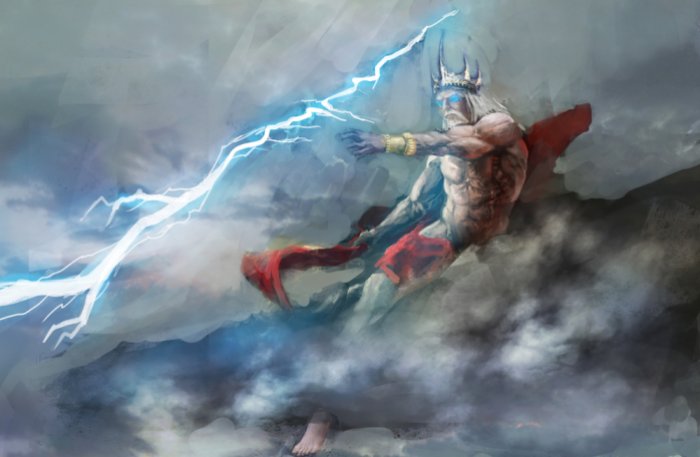
God Zeus - Credit: Stock photo
The torture of King Phineus continued until the arrival of Jason and the Argonauts upon the shores of Thrace.
When King Phineus "came out to meet them with a lean and woful face, and said, "Welcome, gallant heroes, to the land of bitter blasts, the land of cold and misery; yet I will feast you as best I can." And he led them in, and set meat before them; but before they could put their hands to their mouths, down came two fearful monsters, the like of whom man never saw; for they had the faces and the hair of fair maidens, but the wings and claws of hawks; and they snatched the meat from off the table and flew shrieking out above the roofs.
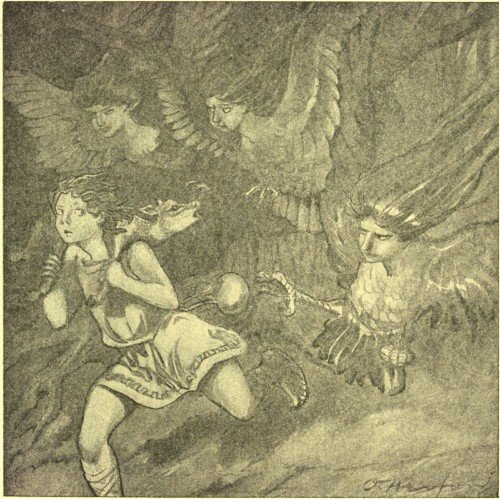
Drawing of the Harpies by Oliver Herford (1863-1935) Credit: Public Domain
Then Phineus beat his breast and cried: "These are the Harpies, whose names are the Whirlwind and the Swift, the daughters of Wonder and of the Amber-nymph, and they rob us night and day.
They carried off the daughters of Pandareus, whom all the Gods had blest; for Aphrodite fed them on Olympus with honey and milk and wine; and Hera gave them beauty and wisdom, and Athené skill in all the arts; but when they came to their wedding, the Harpies snatched them both away, and gave them to be slaves to the Erinnues, and live in horror all their days.
And now they haunt me, and my people, and the Bosphorus, with fearful storms; and sweep away our food from off our tables, so that we starve in spite of all our wealth." 1
King Phineus begged Jason and his men to rescue him from his eternal torture. They were reluctant at first because easing his pain would be an act against the will of the gods. However, Phineus ensured the crew of the ship Argo that they would not be punished for helping him.
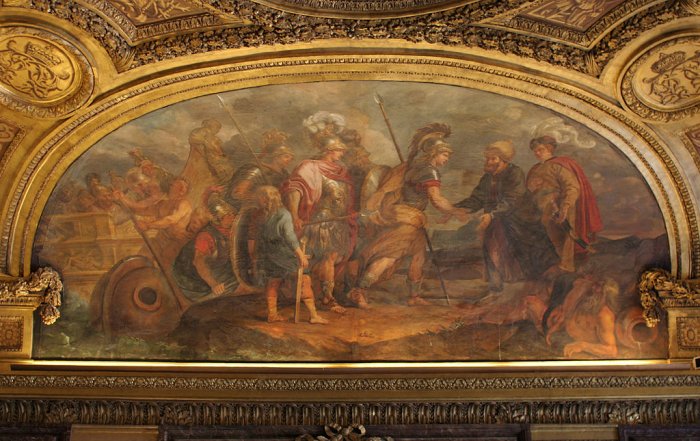
Jason and the Argonauts arriving at Colchis, by Charles de La Fosse. This painting is located in the Château de Versailles, CC BY-SA 3.0
King Phineus told Jason that "he would be the first Greek to sail through the Clashing Rocks which guards the way to Colchis. historically speaking, this part of the myth is an explanation of how the Greeks were first able to sail upstream through the strong currents of the Bosphorus to enter the Black Sea. the Black Sea was no longer called the hostile sea after this, from now on, it would be known as the welcoming sea." 2
Jason and the Argonauts agreed to deliver Phineus from his torment. The Thracian king provided the Argo crew with instructions on navigating between the Symplegades and dealing with the fearsome and shape-shifting Stymphalian birds.
Written by Ellen Lloyd – AncientPages.com
Updated on August 31, 2022
Copyright © AncientPages.com All rights reserved. This material may not be published, broadcast, rewritten or redistributed in whole or part without the express written permission of AncientPages.com
Expand for referencesMore From Ancient Pages
-
 Ancient DNA And Tombstones Lead Scientists To Black Death’s Source Strain
-
 Large 4,000-Year-Old Sumerian Port Discovered In The Desert In Iraq
-
 Ancient Textile Mystery: King Canute Enshrined In His Own Clothes But Found In His Brother’s
-
 Oral Stories Of Australia’s First Nations Might Be 10,000 Years Old – Evidence Found
-
 Peculiar Bronze Mace Head Left By Unknown Ancient Culture Discovered In Poland
-
 Strange Cave Drawings Of Unknown Beings And Animals In Japan Puzzle Historians
-
 Wars Of The Roses: Thirty Two Years Of Struggle To Claim English Throne
-
 Ponte di Cecco – Legend Of A Bridge Built By An Astrologer With The Help Of The Devil
-
 How Gold Rushes Helped Make The Modern World
-
 Shishak (Sheshonq I): Egyptian King Who Invaded Judah And United Egypt
-
 Colossus Of Standing Falcon-Headed God Horus Unearthed In Egypt’s Luxor
-
 Mictlan – Underworld Realm Of The Dead In Ancient Aztec Beliefs
-
 Ancient Tools Found In Maryland Re-Write The History Of First Humans In America
-
 Freemasons Secrets – American Democracy Is Part Of An Ancient Universal Plan – Egyptian Temple And Legendary Expedition Hold The Clues – Part 2
-
 Paleolithic Workshop Unearthed In The İnkaya Cave In The Turkish Western Province Of Çanakkale
-
 Runic Inscription On The Viking-Age Galloway Hoard Deciphered
-
 Roman Tombs Unearthed In Egypt’s Dakhla Oasis
-
 Earliest Evidence Of Rice Harvesting Provided By China’s Ancient Stone Tools
-
 Why Didn’t Alexander The Great’s Body Show Signs Of Decomposition For Several Days? A Never-Before Suggested Explanation – From Scientists
-
 Rare Ancient Paycheck Of A Roman Legionary Soldier Found At Masada

