
How Important Was Music In Ancient Egypt?
Conny Waters - AncientPages.com - The appreciation for music is universal and timeless. Findings show the importance of music was widespread in the Upper Paleolithic period (ca. 50,000-10,000 BC).
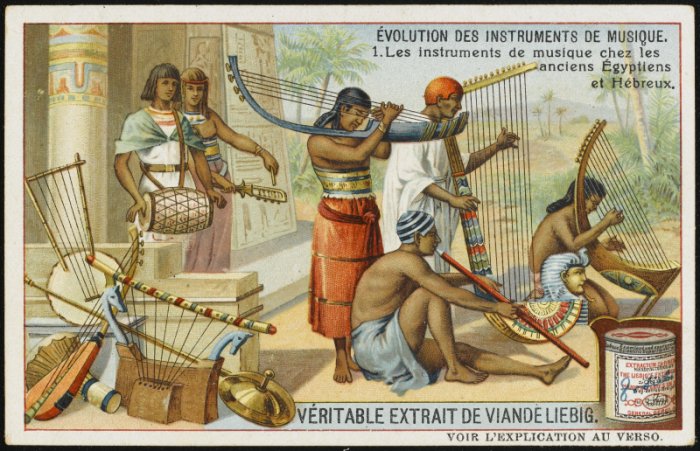
When it comes to more advanced civilizations, we find traces of some of the world’s oldest musical instruments in Egypt. Many ancient Egyptian wall paintings and carvings depict people singing and dancing. It goes without saying that must have played a role in such entertaining activities.
Credit: Archivist - Adobe Stock
While examining tomb paintings dating back to around 2575 B.C. to 2134 B.C., a period known as the Old Kingdom in Egyptian history, scientists discovered people liked to play flutes, clarinet-like reed instruments that had both single and double pipes, lutes, and harps.
One of the most famous and sacred ancient Egyptian instruments was the sistrum, an object associated with Hathor, a goddess who personified the principles of joy, feminine love, and motherhood. The object was made from clay, wood, or metal, and the instrument provided rhythmical accompaniment to other instruments, particularly in religious rites and festivals.
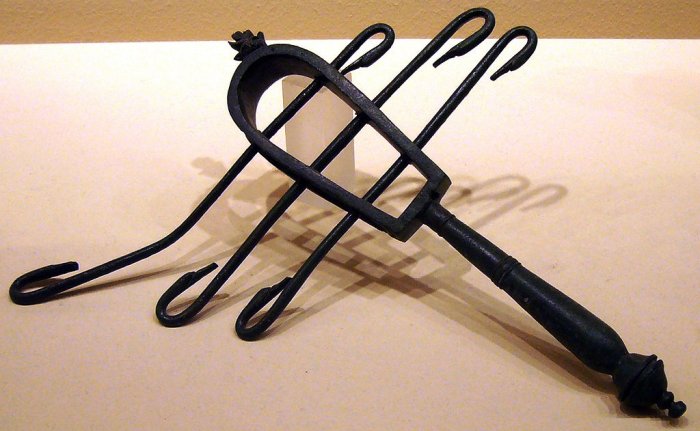
A sekhem-style sistrum. Credit: Lalupa -CC BY-SA 3.0
In the tomb of the Eighteenth Dynasty, Pharaoh Tutankhamun archaeologists discovered two trumpets and various percussion instruments. The trumpets, one of sterling silver and one of bronze or copper, are considered to be the oldest operational trumpets in the world and the only known surviving examples from ancient Egypt.
Studies of Egyptian art reveal musicians were nearly always men in the Old Kingdom. By the time of the New Kingdom, they were mostly women.
Ancient Egyptians also believed music could help a person on his or her journey to the afterlife.
“In Old and Middle Kingdom tombs, inscriptions of songs and hymns were sung to the accompaniment of a harp to celebrate the dead.” 1
Music was part of ancient Egyptians’ daily life, but special occasions sometimes required more elaborate performances.
“Festivals and holy days were marked by music and singing. Groups of musicians would sometimes have to entertain thousands of people. Such festivals were frequent. One village in the Fayum region dedicated 150 days every year to feasting in the name of the gods.
A wide variety of percussion instruments were played. Rhythms were beaten out on tambourines, ivory clappers, drums, castanets, cymbals and an array of chiming bells. Stringed instruments included the lyre (a form of lute) and the harp. These resemble versions that were introduced from Asia. Wind instruments included wooden pipes (similar to modern Egyptian folk clarinets) and early flutes, which were made from reeds and later, bronze. Bugle-like trumpets were used in religious ceremonies and in battle.” 1
See also: More Ancient History Facts
Music was not restricted to gender in ancient Egypt; men could play some instruments, and women could only play some.
We may never know what ancient Egyptian music sounded like. Still, there is no doubt several musical instruments have their roots in Pharaonic times, and listening to various sounds was as popular back then as it is today.
Updated on November 27, 2023
Written by Conny Waters – AncientPages.com Staff Writer
Copyright © AncientPages.com All rights reserved. This material may not be published, broadcast, rewritten or redistributed in whole or part without the express written permission of AncientPages.com
Expand for referencesMore From Ancient Pages
-
 2,500-Year-Old Tibetan Medical Text Describes A Coronavirus-Like Outbreak In Surprisingly Accurate Details
-
 Mosaics Discovered In 1,600-Year-Old Church In Mardin Province,Turkey
-
 Medieval Grave And Skeleton With Arrow In Chest Unearthed In Ancient City Of Plovdiv, Bulgaria
-
 On This Day In History: Storming Of The Paris Fortress – Prison Bastille – On July 14, 1789
-
 Norse Shamanism: A Völva And Her Prophecies Were Feared Among Norse Gods And Vikings
-
 Huge Ancient Underground Stone Circle Discovered Inside Cornwall Neolithic Henge
-
 Mead Of Poetry: Odin Gave This Magical Potion To Gods, Valkyries And Humans
-
 Inca Llajta: Largest And Most Impressive Inca Complex In Bolivia
-
 Bellerophon: Great Hero Of Homer’s Iliad Who Was Punished By Gods For His Pride And Arrogance
-
 On This Day In History: Samuel Morey Patents The Internal Combustion Engine – On April 1, 1826
-
 On This Day In History: Francis Baily First Observed ‘Baily’s Beads’ – On May 15, 1836
-
 Nova Anglia: The Anglo-Saxon New England In The East
-
 Ancient Roman Women Wore Bikini In 1400 B.C.
-
 Intriguing Connection Between Valkyries And Celtic Witches Revealed
-
 Incredible Ancient Extinct World Of Unknown Organisms Discovered
-
 How Can Busy People Also Keep Fit And Healthy? What The Ancient Greeks And Romans Did?
-
 Stone Slab c. 9,000-Year-Old Used In Making Fire Discovered Not Far From Jerusalem, Israel
-
 Mysterious Ichthys – Ancient Secret Christian Symbol With A Deep Meaning
-
 Unique 4,000-Year-Old Board Game – Unearthed In Oman
-
 1,500-Year-Old Tunnel Tomb With Human Remains And Artifacts Accidentally Unearthed In Japan

