
Codex Washingtonianus Contains A Passage Not Seen In Any Other Biblical Manuscript
Ellen Lloyd - AncientPages.com - The Codex Washingtonianus is the world's third oldest Bible, and it is at the Smithsonian's Freer Gallery of Art.
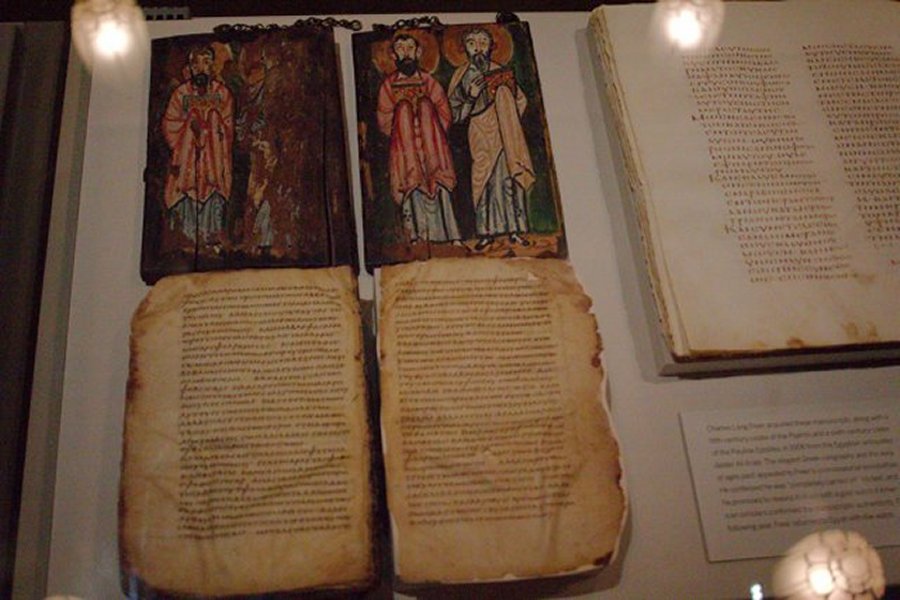 Codex Washingtonianus is the world’s third oldest Bible. Author: Two scribes. Language: Greek, 4th-5th century.
It comprises the four Gospels in the so-called Western order (Matthew, John, Luke, and Mark, as Dea).
It was acquired in Egypt by C.L. Freer, an American businessman and philanthropist (hence, the Freer-Gospels), in 1906 and is now in the Freer Gallery of Art of the Smithsonian Institution in Washington, D.C. Codex Washingtonianus is a 4th–5th-century manuscript probably copied from several different manuscripts.
This priceless ancient book is heavily guarded and rarely makes public appearances. The last time it was on display was in February 2014, when curators showed the document in the Freer Gallery's Victorian Peacock Room, along with a second of four ancient manuscripts purchased by Freer, the museum's founder. The two remaining manuscripts are too delicate or damaged and cannot be put on display.
The Bible has a painted wooden cover, with almost 200 parchment pages, and is reportedly over 1,500 years old.
It features the four Gospels in Greek and is known as the "Codex Washingtonianus," or the "Washington Gospels."
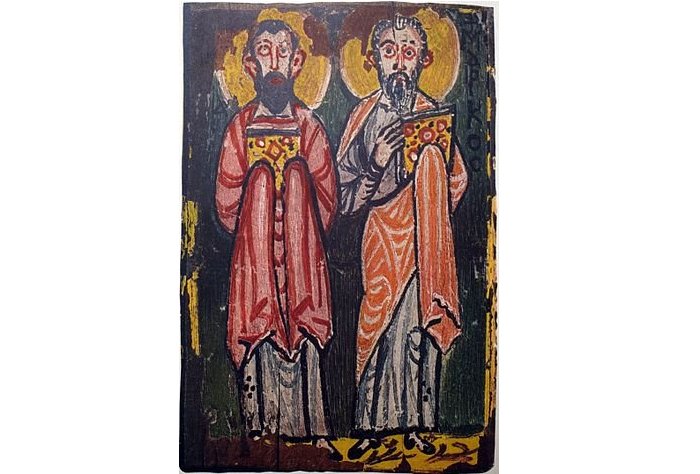 Painted cover of the Codex Washingtonianus, depicting the evangelists Luke and Mark (7th century).
The gallery said Freer purchased the manuscripts in 1906 in Giza, Egypt, and later organized and underwrote significant early biblical scholarship.
The pages are sensitive to light and humidity, so the codex never leaves the museum and isn't exhibited very often.
According to Craig Evans, a biblical scholar at Acadia University in Nova Scotia, only two other complete Gospels texts —Matthew, Mark, Luke, and John—are older than the Codex Washingtonians. They are the Codex Vaticanus, which is held at the Vatican, and the Codex Sinaiticus, which is usually held at the British Library in London.
When the Codex Washingtonianus was first published publicly in 1912, it caused controversy because it contained an extra passage in the Gospel of Mark.
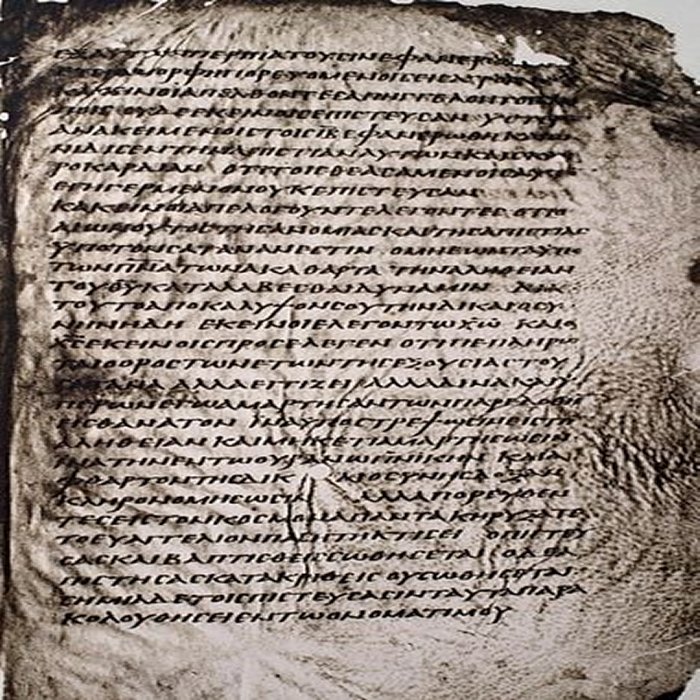 Mark 16:12-17 with the Freer Logion in 16:14. Image credit: Author unknown - Public Domain
"While researching their cultural context and physical structure, it was discovered that the Washington Codex contains a passage not found in any other biblical text - a segment at the end of the Gospel of Mark known as the Freer logion (a logion is a saying attributed to Jesus)," the Free gallery said.
A translation of the Freer logion reads: "And Christ replied to them, 'The term of years of Satan's power has been fulfilled, but other terrible things draw near.'"
That passage seemed to address whether God or Satan was in charge, said Bethel University's Holmes.
Evans said that news of the passage at the time came amid rumblings that the King James Version wasn't sufficiently representative of the earliest iteration of the Bible. Conservative Christians were unhappy about that, he added.
So, the publication of the Codex Washingtonianus, with its additional passage attributed to Jesus, caused more consternation because it was another challenge to the Bible that people knew.
He said it's not so much a problem now, but it shook up many people at the time.
The additional passage, referred to as the Freer logion, was probably an oral saying that somehow made its way into the Gospels, said Holmes.
"There's no religious tradition that uses it as part of Scripture," he said. "It's almost like a margin comment that somebody wrote down because they heard it and wanted to remember it, and the scribe worked it in later."
He wasn't particularly religious or attracted to them as sacred texts. Freer purchased the codex partly because he found it mysterious and beautiful.
Written by - Ellen Lloyd – AncientPages.com
Updated on May 20, 2024
Copyright © AncientPages.com All rights reserved. This material may not be published, broadcast, rewritten or redistributed in whole or part without the express written permission of AncientPages.com
More From Ancient Pages
-
 New Discoveries In Excavated Ancient Temple Linked To Secret Mithras Religion
-
 Cajamarca, Peru: Three Archaeological Sites – Identified
-
 Easter Island’s Statues Reveal Bodies Covered With Unknown Ancient Petroglyphs
-
 The Sistine Chapel Cypher – Secret Messages In The Art Of Michelangelo
-
 Rare And Tiny Ancient Stamps Found In Falster May Show The Way To An Unknown King’s Home
-
 Riddle Of The Shining Sphere And Its Unknown Properties – Why Did It ‘Vanish’?
-
 Indigenous Village Estimated To Be 11,000 Years Old – Discovered Near Sturgeon Lake
-
 Mysterious Ancient Artifacts Discovered In Virginia That We Were Never Meant To See
-
 Mysterious Runic Inscription Found In Mighty Viking Ship Burial Surprises Archaeologists
-
 Who Was The Sapa Inca?
-
 The Gold Compartment At Habu Temple Looks Magnificent After Restoration
-
 Exploring Ancient Secrets Of An Ancestral Maya Neighborhood And Some Puzzling Buildings
-
 How Did A Rare 2,000-Year-Old Gem Seal Depicting God Apollo End Up In The City Of David?
-
 Beginning Of Fashion – Paleolithic Eyed Needles And Evolution Of Dress
-
 Rosicrucians: Facts And History About The Mysterious Secret Society
-
 Mystery Of The Lost Biblical City Of Ai – Where Was It Located?
-
 Ruins Of Biblical City Of Corinth Discovered Underwater – Giant Monuments and Remains Of Lighthouse Still Well-Preserved
-
 Did Ancient Romans And Greeks Love As We Do? Perhaps Even More Hopelessly
-
 How Did Ancient Civilizations Make Sense Of The Cosmos And What Did They Get Right?
-
 Who Said ‘Eureka’ First And Why?

