
Uraeus – Sacred Emblem That Symbolized Sovereignty, Royalty, Deity And Divine Authority In The Land Of Pharaohs
A. Sutherland - AncientPages.com - The king wore the Uraeus on a wreath or on his crown during the Middle Kingdom. It symbolized legitimacy to the ruler and was represented by a rearing cobra with an inflated hood.
It is also of great importance to certain symbols how they are placed. Therefore, the vertical positioning and higher elevation of the emblem – in this case, that of Uraeus, means - spiritual superiority.
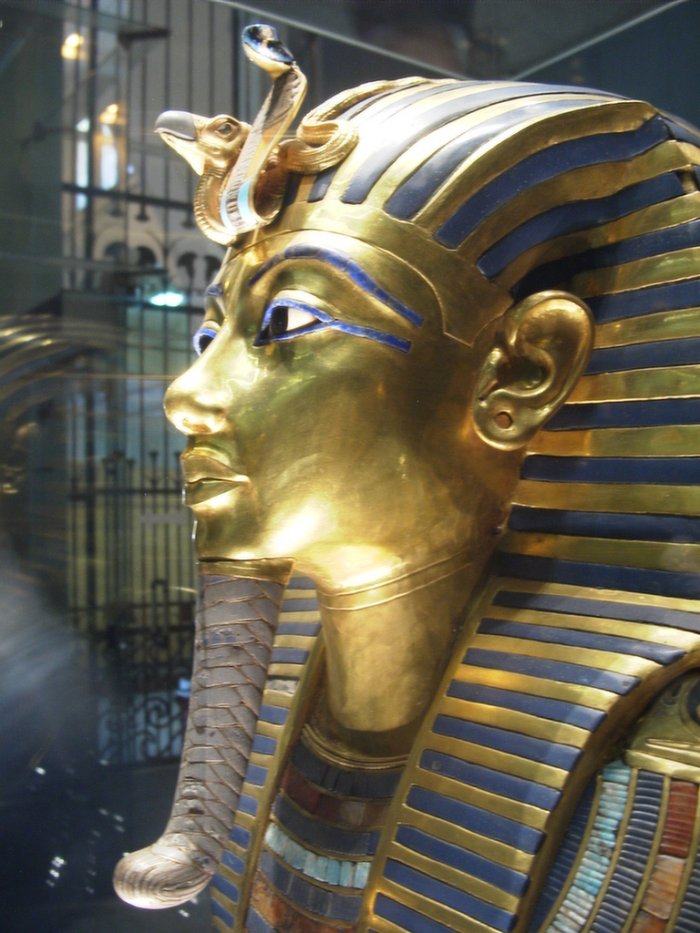
Uraeus on the forehead of Tutankhamun's mask. (Yippie~commonswiki - Photo: Erik Hooymans - CC BY-SA 2.5
Generally, the emblem of Uraeus (from the Greek: 'Ouraios - at its end"), is a stylized, simple form of the Egyptian cobra, symbolizing sovereignty, royalty, deity, and divine authority in Ancient Egypt.
The Pharaohs wore it as a head ornament: either with the body of the goddess Wadjet on top of the head or as a crown encircling the head. It indicated the protection of Wadjet and strengthened the pharaoh's claim to the country. While placed on the Pharaoh's head, the Uraeus was part of the ruler's crown.
The Uraeus of Egyptian rulers, positioned on the forehead, expressed the spiritualization of the inner force, the importance of which is significant in Tantrist Yoga.
As worn on the head, this powerful object dates back to the tradition of the tribes in ancient Libya. Still, in ancient Egypt, the Uraeus's power focused on the Pharao, giving him protection.
In myths, the snake had many associations with great mythological symbols like the Eye of Ra, the Eye of Horus, and the crown of Lower Egypt. Its importance is associated with the Sun God, Ra, and its omnipotence. The emblem was Ra's guardian, always ready to spit poison at his enemies.
Uraeus And Close Associations With Goddesses
The Uraeus was also associated with Hathor, Bastet, Sakhmet, Tefnut, and sometimes Nekhbet of Upper Egypt, which we know as the vulture goddess usually depicted as a cobra.
The Uraeus was a hieroglyphic sign for "Goddess," derived from the Serpent Mother, one of Egypt's oldest deities, known as Uatchet, Uachit, or Ua Zit. The Greeks recognized her as Buto ('the Green One') due to her connection to the sacred city Per Uto. Uto was the patron goddess of Lower Egypt and the counterpart of the Upper-Egyptian goddess Nekhbet.
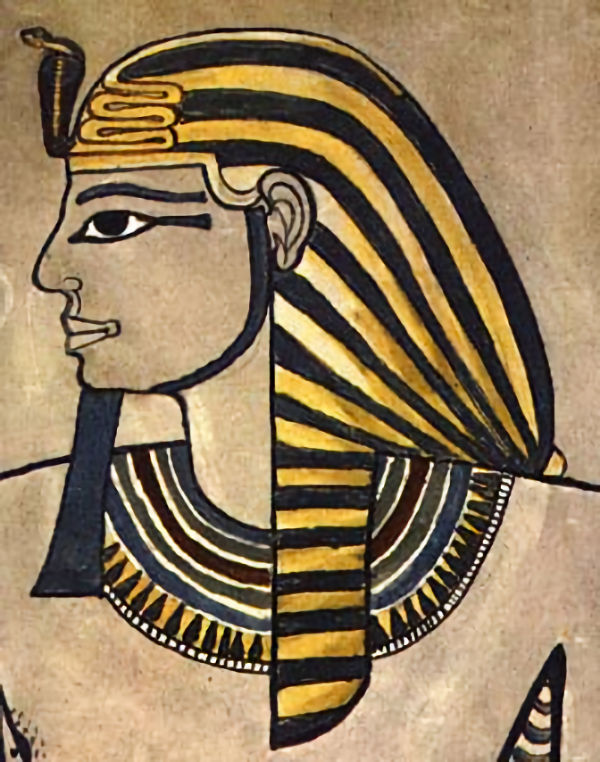
Amenhotep II Uraeus from KV35, East Valley of the Kings, Luxor, Egypt. Credit: Public Domain
And again, Uto and the vulture Goddess Nekhbet represented cycles of birth and death and beginning and ending.
The goddess Wadjet, one of the earliest Egyptian deities who protected Lower Egypt was depicted as a 'Cobra-Uraeus,' and also, Isis gained the throne of Egypt for her husband, Osiris with this sacred emblem.
Without any doubt, the Uraeus symbolizes the raised serpent. It's worth noting that the Kundalini is often depicted as a serpent that is the universal symbol of strength transformed into spirit or an aspect of power.
Juan Eduardo Cirlot Laporta, Spanish poet, art critic, and mythologist, wrote that Carl Gustav Jung (1875 – 1961) suggested that the Egyptian Uraeus is the visible expression of the Kundalini on a higher plane.
The Uraeus is the most precious ornament of the royal headdress, and its use as a royal symbol dates back to the most ancient representations of the ruler in ancient Egypt. Although it is not displayed on every image of a pharaoh, especially in Egypt's early dynasties, it remains omnipresent until Roman times.
The Uraeus's appearance changed with time. Its markings and design varied considerably during the three thousand years of use in the Land of the Pharaohs.
However, the emblem's primary form of an erect cobra with an extended hood never changed or was modified.
It was often worn on the foreheads of deities and rulers in the position of the "third eye" of insight, and thus, it stood for royal spirit, healing, and wisdom.
Written by – A. Sutherland - AncientPages.com Senior Staff Writer
Copyright © AncientPages.com All rights reserved. This material may not be published, broadcast, rewritten or redistributed in whole or part without the express written permission of AncientPages.com
Expand for referencesReferences:
Cirlot, J. E.. A Dictionary of Symbols
Walker, Barbara G. The Woman's Dictionary of Symbols and Sacred Objects
Nozedar, Adele. The Element Encyclopedia of Secret Signs and Symbols
More From Ancient Pages
-
 Identity Of Anti-Christ And Number 666 Revealed By Ancient History Professor
-
 DNA Evidence For Early Contact Between Farmers And Pastoralists In Black Sea Region
-
 Ancient Roman Coins Thought To Be Fakes Are Authentic – Experts Say
-
 Supay: God Of Death And Underworld And Ruler Over Race Of Demons According To Inca Beliefs
-
 Ancients Built Hindu Temples On A Straight Line Without Access To Satellite Images
-
 Mysterious Ancient Underwater Structure Beneath MacDonald Lake Reveals Traces Of A Lost Civilization In Ontario
-
 2,000-Year-Old Smuggled Glazed Bricks Sent Back To Iran By Switzerland
-
 Lamashtu Plaque: Assyrian Healing Device Against The Evil Goddess
-
 Sarmizegetusa And Its Andesite Sun Artifact Similar To The Mayan Calendar
-
 New Clues About The Kensington Runestone Rewrite Ancient History But One Mystery Remains
-
 Incredible Roman Necropolis With Dressed Skeletons Buried In Ornate Tombs Discovered Close To The Ancient City Of Tarquinia
-
 Armenia: Old Land Where Myths, Legends And Long History Meet
-
 World’s Oldest Wine Found In 2,000-Year-Old Roman Tomb In Carmona, Spain
-
 Cisterns Unearthed In Metropolis, Turkey Give Insight Into Daily Life Of Its Inhabitants 1,500 Years Ago
-
 What Was Humor Like In The 13th Century?
-
 Magnificent ‘Sword Pyramid’ Lost By A Sutton Hoo-Era Lord Discovered In Norfolk
-
 Headless Statue Of Life-Size Ancient Mayan Warrior Discovered In Mexico
-
 Bees Originated From An Ancient Supercontinent Millions Of Years Earlier Than Previously Thought
-
 The Great Stupa At Sanchi – Oldest Stone Structure In India
-
 Fascinating Accounts Of Incredible Vehicles, Cosmic Cities In Vedic Literature

