Neanderthals Archive
Evolution
AncientPages.com - The French archaeologist Ludovic Slimak has spent the past 30 years rummaging fields and caves from the Horn of Africa to the Artic Circle, and, of
Read More
Archaeology
Jan Bartek - AncientPages.com - The Neanderthals and Homo sapiens were both innovative and often devised similar surviving techniques independently. Recently, scientists demonstrated Neanderthals invented or developed birch
Read More
Archaeology
Conny Waters - AncientPages.com - Birch tar is the oldest synthetic substance made by early humans, and those humans were in the long past - Neanderthals. But the
Read More
DNA
Jan Bartek - AncientPages.com - Using several different methods of DNA analysis, an international research team has found what they consider to be strong evidence of an interbreeding
Read More
DNA
Jan Bartek - AncientPages.com - The course of human history has been marked by complex patterns of migration, isolation, and admixture, the latter a term that refers to
Read More
Featured Stories
Ellen Lloyd - AncientPages.com - In Finland, many unexplored ancient caves hold many secrets. One of them is called Varggrottan, which means Wolf Cave in English. When archaeologists
Read More
Evolution
Jan Bartek - AncientPages.com - Scientists have tried to solve the enduring mystery of language evolution, and it seems something that happened 70,000 years ago may shed light
Read More
Archaeology
Jan Bartek - AncientPages.com - A new study has given an intriguing glimpse of the hunting habits and diets of Neanderthals and other humans living in Western Europe.
Read More
Archaeology
Conny Waters - AncientPages.com - The first modern humans spread across Europe in three waves during the Paleolithic, according to a new study. The archaeological record of Paleolithic
Read More
Archaeology
Jan Bartek - AncientPages.com - If you could travel back 100,000 years in time, you'd find yourself living among multiple groups of humans, including anatomically modern humans, Neanderthals,
Read More
DNA
Conny Waters - AncientPages.com - An analysis of ancient genomes suggests that different branches of the human family tree interbred multiple times and that some humans carry DNA
Read More
Archaeology
Conny Waters - AncientPages.com - It sounds a little like Stone Age standup: A Denisovan and a human walk past a bees’ nest heavy with honeycomb. What happens
Read More
Archaeology
Conny Waters - AncientPages.com - It is called radiocarbon 3.0, the newest method in radiocarbon dating, and promises to reveal valuable new insights about key events in the
Read More
Archaeology
Jan Bartek - AncientPages.com - A scientist has conducted a spatial analysis of the faunal remains and lithic tools for the Neanderthal occupation of level F at the
Read More
Archaeology
Conny Waters - AncientPages.com - Like a merchant of old, balancing the weights of two different commodities on a scale, nature can keep different genetic traits in balance
Read More
Archaeology
Conny Waters - AncientPages.com - It is called radiocarbon 3.0, the newest method in radiocarbon dating, and promises to reveal valuable new insights about key events in the
Read More
Archaeology
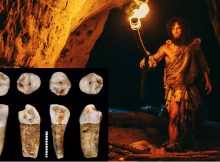
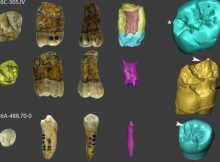
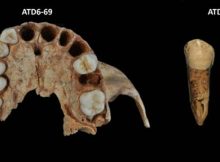
Jan Bartek - AncientPages.com - A new analysis of the teeth remains found at the Lezetxiki site confirm that they belonged to Neanderthal individuals. Dental remains from Lezetxiki.
Read More
Archaeology
Jan Bartek - AncientPages.com - In a cave just south of Lisbon, archaeological deposits conceal a Paleolithic dinner menu. As well as stone tools and charcoal, the site
Read More
Archaeology
Jan Bartek - AncientPages.com - Our knowledge of the Neanderthals is constantly improving, but some aspects of our ancient ancestors' spiritual beliefs are still a riddle. Scientists are
Read More
Archaeology
Conny Waters - AncientPages.com - The CENIEH participates in a study in which dental remains of Homo antecessor were analyzed using Micro-Computed Tomography: the results indicate that this
Read More
Featured Stories
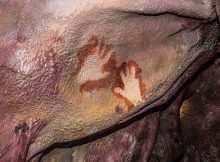
AncientPages.com - One of the most hotly debated questions in the history of Neanderthal research has been whether they created art. In the past few years, the consensus
Read More
Featured Stories
AncientPages.com - Many believe our particularly large brain is what makes us human – but is there more to it? The brain’s shape, as well as the shapes
Read More
Archaeology
Jan Bartek - AncientPages.com - Submerged below the waves of the English Channel lies an important scientific record of undiscovered Neanderthal artifacts dating back to the last ice
Read More
Featured Stories
AncientPages.com - In evolutionary terms, the human population has rocketed in seconds. The news that it has now reached 8 billion seems inexplicable when you think about our
Read More
Featured Stories
AncientPages.com - Imagine that you have an unhealthy interest in your neighbors' lives. Unable to ask them directly, you rifle through their rubbish bins. You find the bones
Read More
Archaeology
Jan Bartek - AncientPages.com - A new paper proposes that Homo sapiens may have been responsible for the extinction of Neanderthals not by violence, but through sex instead.
Read More
Archaeology
Jan Bartek - AncientPages.com - The first Neanderthal draft genome was published in 2010. Since then, researchers from the Max Planck Institute for Evolutionary Anthropology have sequenced a
Read More
Archaeology
Jan Bartek - AncientPages.com - A new study has, for the first time used zinc isotope analysis to determine the position of Neanderthals in the food chain. The
Read More
Archaeology
Conny Waters - AncientPages.com - Who were the Neanderthals and what caused their demise? For more than 350 000 years, Neanderthals inhabited Europe and Asia until, in a
Read More
Archaeology
AncientPages.com - Neanderthals have served as a reflection of our own humanity since they were first discovered in 1856. What we think we know about them has been shaped
Read More
Archaeology
Conny Waters - AncientPages.com - Neanderthals are the closest relatives to modern humans. Comparisons with them can therefore provide fascinating insights into what makes present-day humans unique, for
Read More
Featured Stories
Jan Bartek - AncientPages.com - The Altamura Man lived more than 130,000 years ago when ice sheets were expanding from out of Antarctica and Greenland. His fossilized skeleton
Read More
Archaeology
Jan Bartek - AncientPages.com - Neanderthals are our closest extinct relatives and modern humans share 99.7% of their DNA. These intriguing beings were widespread across Europe and Western
Read More
Archaeology
Jan Bartek - AncientPages.com - Using the latest scientific methods, researchers want to solve a great mystery of human evolution: Why are we the only humans left? Two
Read More
Archaeology
Conny Waters - AncientPages.com - Scientists have investigated whether Neanderthals were well adapted to life in the cold or preferred more temperate environmental conditions. Based on investigations in
Read More
Archaeology
Jan Bartek - AncientPages.com - Neandertals disappeared around 40,000 years ago, but many details of their extinction remain unclear. To elucidate the situation, it is useful to explore
Read More
Archaeology
Conny Waters - AncientPages.com - Scientists have discovered surprising evidence modern humans successively inhabited the Mandrin Cave in France within an interval of barely a year. Studies of
Read More
Archaeology
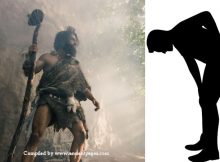
Jan Bartek- AncientPages.com - Examining the spines of Neanderthals, an extinct human relative, may explain back-related ailments experienced by humans today, a team of anthropologists has concluded in
Read More
Archaeology
Conny Waters - AncientPages.com - A well-preserved Palaeolithic site in northern China reveals a new and previously unidentified set of cultural innovations. When did populations of Homo sapiens
Read More
Archaeology
Jan Bartek - AncientPages.com - Very few proteins in the body have a change that makes them unique compared to the corresponding proteins in Neanderthals and apes. Researchers
Read More
Archaeology
Conny Waters - AncientPages.com - Hunter-gathers caused ecosystems to change 125,000 years ago. These are the findings of an interdisciplinary study by archeologists from Leiden University in collaboration
Read More
Archaeology
Conny Waters - AncientPages.com - Neanderthals, our closest relatives, became extinct between 40,000 to 35,000 years ago. Since the discovery of the first Neanderthal fossil 165 years ago,
Read More